
Outstanding Warrants in Virginia
Think of an active warrant as court paper still live. It has been issued but not yet served, recalled, or destroyed by court order. Virginia publishes no single public registry of them. The state instead offers three separate windows: a restricted law-enforcement information network, a public court-case system, and a curated Virginia State Police Wanted Persons page. Each answers a different question. None combines everything into one statewide list. The warrant itself, and the record of its execution, stays with the issuing court and the sheriff or police agency assigned to serve it. Virginia localities differ in what they publish. Some post a local wanted or active-warrant report, and each public interface has its own limits. Checking for yourself or a family member? Identify the court and locality first. Then ask the clerk about the order and the responsible agency about service status. A name missing from a public list is not a clearance.
Virginia Has No Complete Public Warrant Registry
Virginia's public Online Case Information System, OCIS 2.0, covers selected adult criminal and traffic cases in General District Court plus selected Circuit Court records. Think of it as a case search. It is not a live warrant search. What it can do is point you toward the right court, case number, charge, and hearing date. A blank response means only that no matching public case appeared under your search terms and the available court coverage. It does not establish that no warrant exists. Start there anyway. The official OCIS terms say as much, warning that entries may be incomplete or out of date and directing users to the clerk for accuracy and completeness. The court search earns its keep when it names the correct locality. It cannot query Virginia's restricted VCIN or the national NCIC systems. It also shows no universal active, served, or recalled status. Virginia court data can lag because each clerk enters information for that court alone. Once a likely Virginia case turns up, call the clerk and the responsible sheriff or police unit. Follow the docket and the agency's instructions. A public result is not a warrant certificate. The Virginia OCIS portal presents the public search and its disclaimer before any query runs.
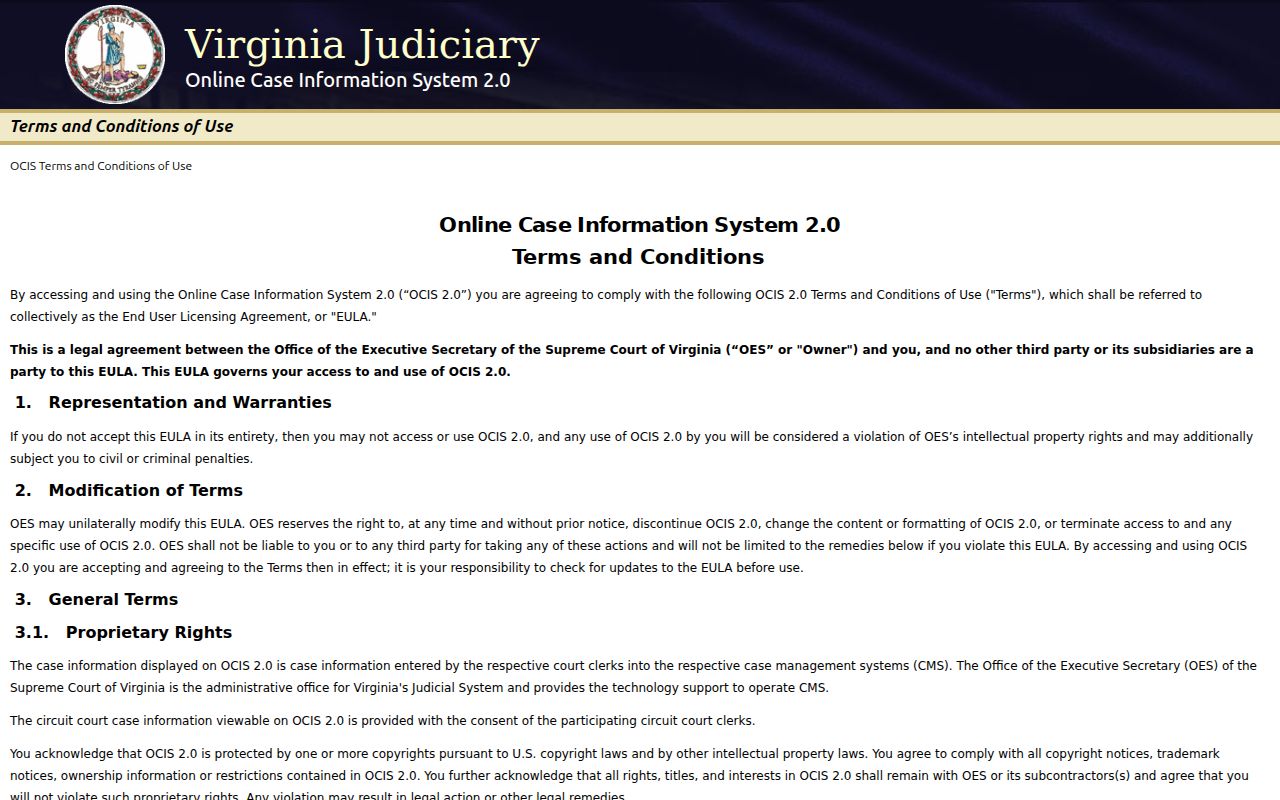
This is the public face of Virginia's court case information, not a warrant registry. The interface itself carries no warrant status. For a specific process, check the issuing court and the local service agency. Note: OCIS availability and the date of data entry do not establish whether a local warrant remains executable.
The Virginia Active-Warrant Picture
Virginia State Police runs VCIN, the hub linking Virginia's law-enforcement records to the national NCIC network for authorized agencies. A warrant moves in stages. It leaves the issuing court, reaches the agency assigned to serve it, and then enters restricted systems under reporting rules. Under Virginia Code §19.2-390, felony arrest warrants and capiases must reach VCIN and NCIC within 72 hours after receipt. That statute governs law-enforcement reporting. It opens nothing to the public. The 2023 VSP Facts & Figures report counted 667 member agencies and 180,862 warrants entered during that year. Those figures measure network participation and entries. They do not count currently outstanding warrants. The public cannot infer from them how many remain active or whether a particular record was updated. The Virginia State Police VCIN information page describes the network's agency role without exposing internal records.
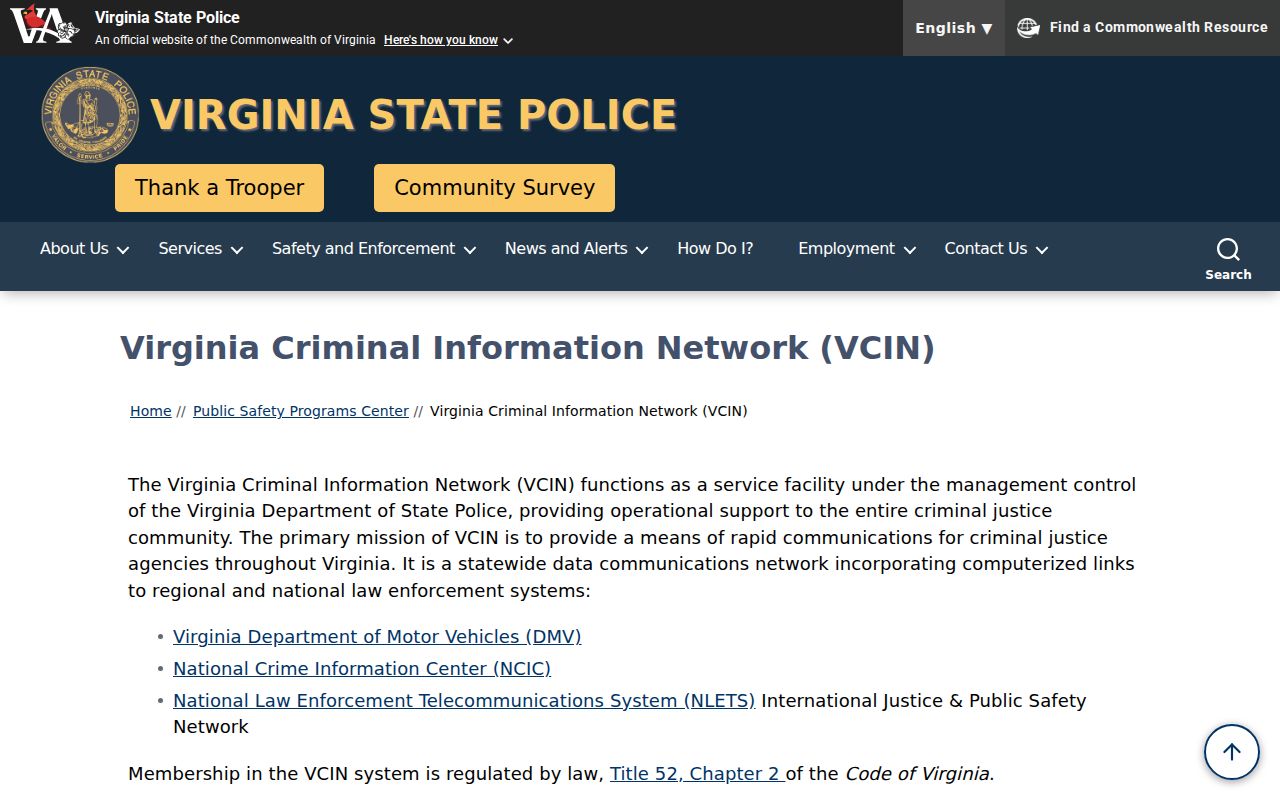
The public page maps out who takes part in the network rather than letting any one person run a lookup through it. Confirmation still has to come from the issuing court or from the local officer charged with serving the warrant. Note: VSP's 2023 entry count tracks system activity, not a current total of Virginia outstanding warrants.
Virginia County Warrant Lists Can Have Gaps
Virginia localities that publish a searchable active-warrant report are posting their own records under their own rules. Chesterfield County is the clearest example. Its official report warns that data may change quickly. It may be incomplete or inaccurate. It may even exclude warrants that remain active for service. So a local report is a starting point, not a Virginia statewide list and not a way to clear a case. A blank result on one county site promises nothing. Treat it as one window, then ask the court. The official Chesterfield active-warrant page spells out its own report and its limitations, from the agency notice to the search controls.
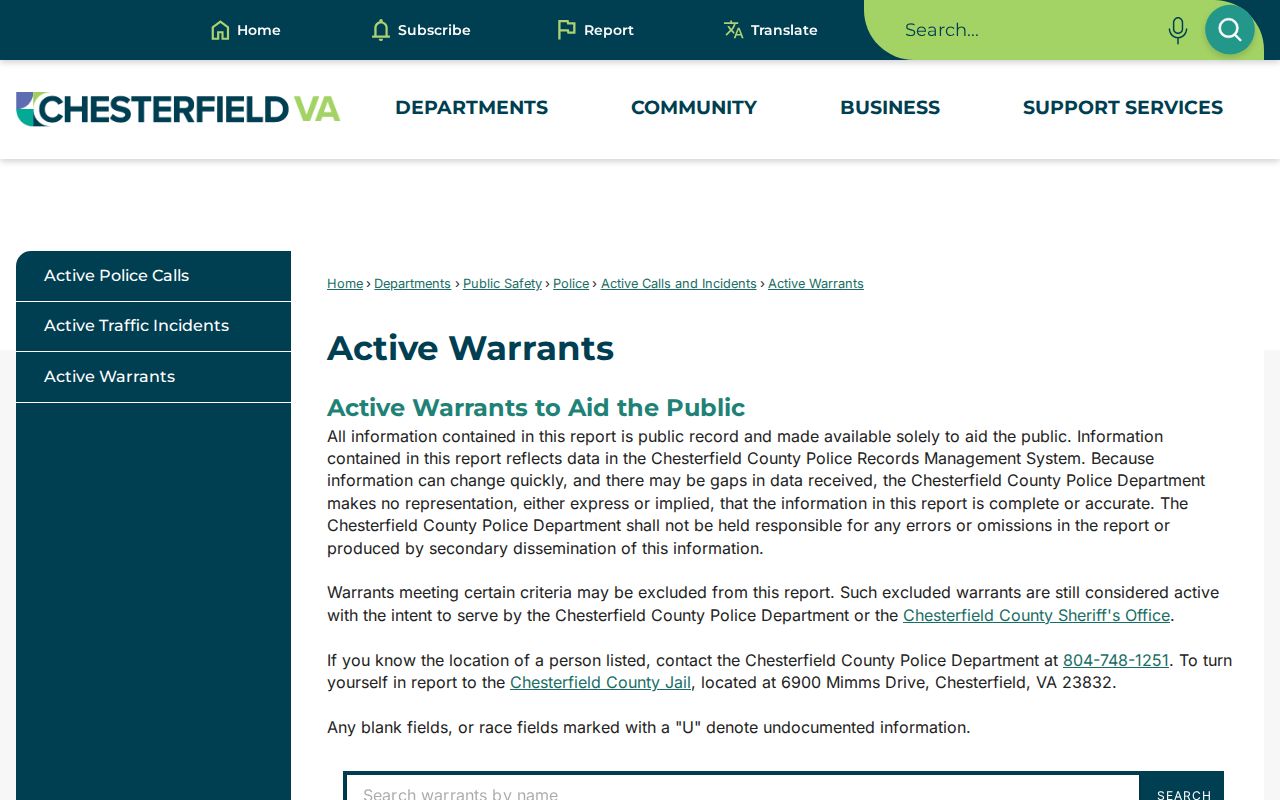
Virginia local reports carry this warning for a reason. Each list speaks only for its own agency. Ask the issuing court about the specific process. Note: a local list can state its own limits, but it cannot certify records held by another court or agency.
Active Warrants: What They Show
Virginia publishes no statewide active-warrant field the public can pull. OCIS shows selected court-case fields for a case, and a local report may carry its own format and its own limits. So a reader works with case information that can help locate a record: the charge, a hearing date, a general case status. None of those proves an executable warrant. The table below walks through those fields and marks where the statewide warrant gap sits.
| Warrant Number or Case Reference | OCIS has no public warrant-number schema. Its help gives case-number examples such as CR12345678-90; this is a case reference, not a warrant number. |
|---|---|
| Court and Case Number | The court and its case reference identify the file to ask about. Case-number search requires one specific court. |
| Defendant and Charge | The name, charge, and code section help locate the matter. A matching name alone does not confirm identity or current process. |
| Hearing and Offense Dates | These dates may help connect the case to a summons or missed hearing and guide the clerk's review. |
| Disposition and Service | Case details may include a disposition or entered service/process information. Public display does not guarantee a current warrant-status update. |
| Bond or Current Status | No uniform active, served, recalled, or bond field is published statewide. Ask the court about its order and the local agency about service. |
Follow whatever label the court itself uses for the process. Virginia records may say arrest warrant, capias, attachment, or something else entirely. "Bench warrant" is plain talk, not a statewide status code in Virginia. Note: a public case field never holds every active-warrant detail that a Virginia sheriff or police unit keeps.
Virginia Warrant Records Have No Shared Status Code
Virginia has no shared warrant-status code across its courts. The public OCIS instructions define none. A case can read pending or closed in OCIS while a separate arrest warrant or capias still needs confirmation from the court or serving agency. Local public lists lean on their own labels too. An entry can stay visible after something changes, or omit a process that is still active. When a docket event or order is unclear, ask the Virginia court handling the case what it means.
- Active
- A public label whose exact meaning depends on the record source; it is not a shared statewide OCIS warrant code.
- Served
- Process has been executed, but the court file may still need a disposition or later order.
- Capias
- Virginia court process directing that a person be brought before the court; its purpose depends on the case and order.
- Recalled or quashed
- A court has withdrawn or set aside process; confirm the order and ask the serving agency when its record changes.
Never guess from a missing status label in Virginia. The clerk can explain the docket, and the local agency can confirm its own service record.
Virginia Warrant Roundups
Virginia runs no statewide warrant roundup, amnesty week, or all-warrant public portal. What the state does publish is different: Virginia State Police maintains a curated Wanted Persons program with notices and official tip contacts. Treat it as selective public communication. It is not an active-warrant database, and it cannot tell you a person's full court status.
Key point: The Virginia State Police Wanted Persons program is a curated official notice page. It is not a full public warrant list or personal status-check service.
See the State Most Wanted page for how that program works. For a case-specific warrant question, the issuing court and the responsible locality remain the right places to confirm an active warrant. A person's absence from a curated listing proves nothing about clearance.
Virginia Civil Searches Do Not Check Warrants
Even an official county search can be aimed at a different record type. The Fairfax County Sheriff's Civil Process Search states that it returns cases filed in Fairfax General District Court within its civil-process scope, and the Fairfax County civil search labels its court and civil scope right above the search fields. Neither is a criminal arrest-warrant search. A civil result, or a blank civil search, cannot confirm whether criminal court process exists in Virginia. Agency responsibility splits by locality too. The Prince William County Sheriff's FAQ says its system covers court- or sheriff-originated warrants, while police-originated warrant questions go to the relevant police department. That division of work is local, not a statewide rule. Before trusting a search page or dialing the wrong office, ask the Virginia court which agency handles its process.
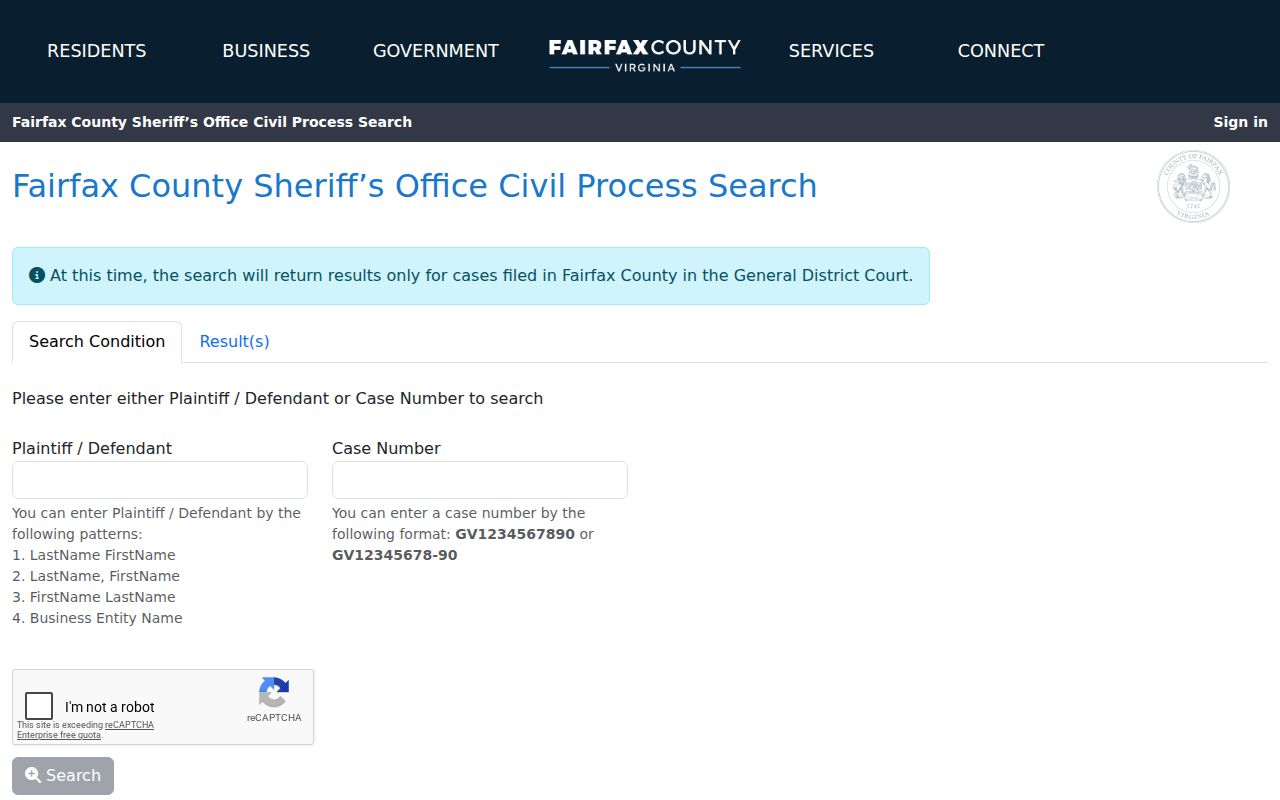
That official page offers a limited civil case search, not criminal warrant data. Use the proper Virginia court and agency channel for the record being checked.
Finding Your Own Name on a List
Spot a listing that might concern you? Start by identifying the issuing locality and court. Then call the clerk with the case number or court paper and ask three things: whether a current arrest warrant or capias exists, whether it has been recalled, and whether the court requires an appearance or motion. Next, contact the sheriff or police unit that serves the process and ask how it handles confirmation, voluntary appearance, or bond. Practice varies by locality across Virginia, and no online list can promise a particular outcome. An attorney can review the docket, contact the court, and advise on a recall request, appearance, or bond hearing. Keep one caution in mind: a payment receipt does not by itself show that a capias was recalled or that the law-enforcement record was updated. Once the court issues a disposition or recall order, ask the clerk and the serving agency how to confirm their records reflect it. Use Browse Counties to reach the Virginia county or independent city that owns the case.
Important: Before appearing, ask a lawyer to review the process and confirm where to report; local policies vary, and a warrant may lead to custody.
Virginia Warrant Records Need the Right Custodian
Send a public-record request to the office that keeps the record. Court docket and order requests belong with the issuing clerk. A local sheriff or police request covers only what that agency holds. Virginia FOIA governs public-body records subject to exemptions, but it will not let a requester inspect restricted VCIN or NCIC data, and it cannot force creation of a new statewide warrant report. Ask for an existing record, and state the court, case number, date range, and document type as clearly as you can. Local agencies publish their own intake instructions and may charge actual costs. Fairfax County Sheriff's Office lists email and mail methods for its FOIA requests and explains that cost depends on the work needed; the Fairfax County Sheriff FOIA page describes that method and its cost information. That local process shows how an agency request can differ from one to a court clerk in Virginia. It is not a statewide sheriff form, and it is not a warrant-status service.
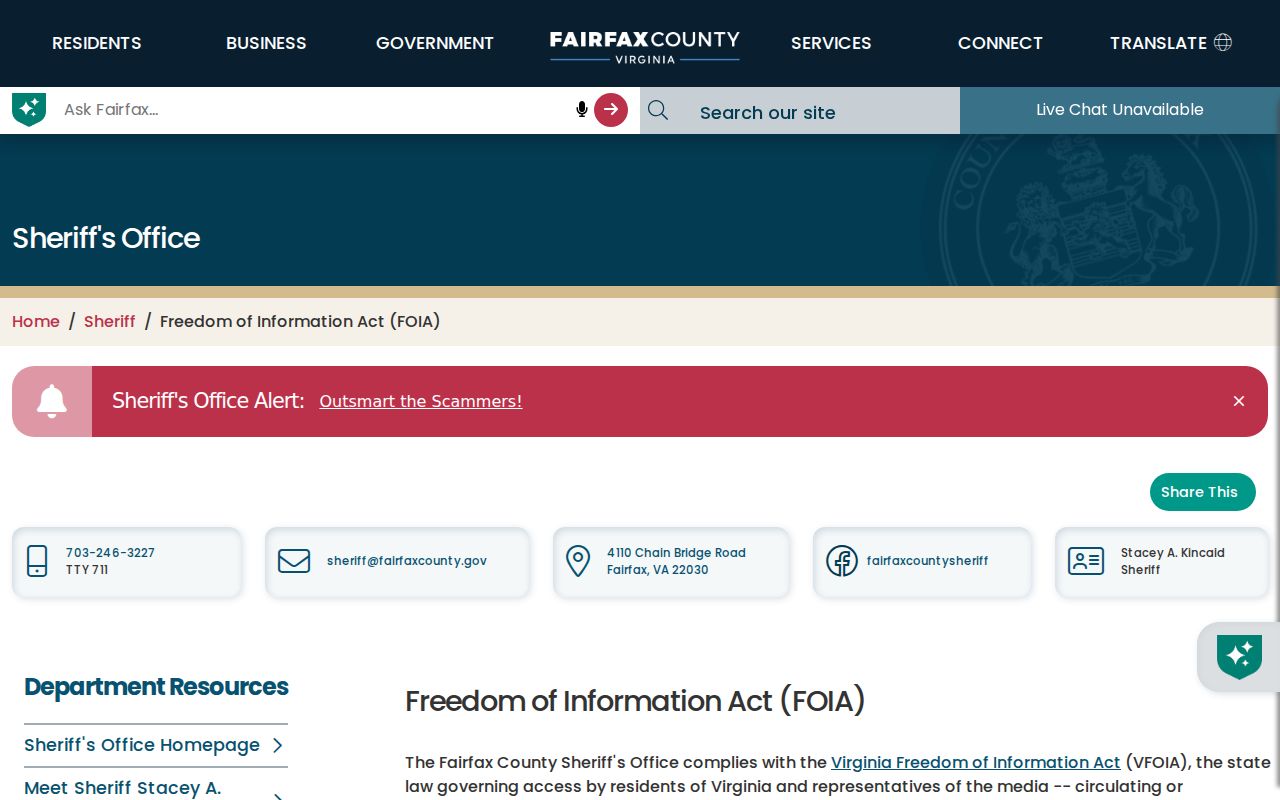
That official page gives instructions for requesting records held by one local sheriff's office. Use the directory to find the office for the Virginia locality that issued your process. Note: a public-records request does not disclose information held only in restricted criminal-justice systems.