
Virginia Warrant Searches
Virginia publishes no statewide warrant lookup anyone can search. The closest public tool is OCIS 2.0, the Online Case Information System, which covers eligible adult court cases. It is a case portal, not a warrant-status portal. It can still help you locate a matter in General District Court and some Circuit Court records. Virginia's actual warrant files sit in VCIN and NCIC. Those law-enforcement systems serve authorized agencies only. No public page can query them for you. So a Virginia warrant check runs on court information first, then confirmation from the offices that hold the file. Gather the full name used on the summons or court paper, plus any case number or hearing date. OCIS offers no date-of-birth field. A birth date still helps a clerk or warrant desk separate people with similar names. Do not treat any result as final. A blank search or an old docket entry is not an answer about active process either. The Virginia court that issued the process and the local sheriff or police confirm the record. If a warrant may affect you or a family member, ask a lawyer in Virginia about the safest step before traveling to an agency.
- Search OCIS 2.0 by name, case number, or hearing date, using the court level and locality filters that fit the case. Treat it as court case information, not proof that a warrant is active or inactive.
- For an older or locality-specific General District Court file, the legacy GDC search can be used one court at a time. A Circuit Court felony file belongs with that court's clerk. Juvenile and family matters go to the JDR clerk, with access limits.
- Open Browse Counties to identify the county or independent city that owns the case and reach the proper court and local agency.
- Ask the issuing clerk about the current docket, any capias or arrest warrant, and the steps to appear or request a hearing. Then ask the responsible sheriff or police warrant desk about service status and local appearance procedure.
- If an online record is unclear, request the specific existing court or agency record. A lawyer can help interpret the order and coordinate a recall request, bond hearing, or voluntary appearance.
Virginia OCIS Is Not a Warrant Search
OCIS 2.0 searches court cases, not warrants. The Virginia Judiciary describes three ways in: name, case number, or hearing date. Filters narrow the query to Circuit Court, General District Court, or J&DR Court. Name search may cover all courts by default. A case-number search needs the specific court. The locality menu loads dynamically. So no static list of every Virginia court appears on the help page. Type the name as it appears on the case paper. Partial names work. Each entry still needs at least two characters. The official OCIS search help lays out the query modes, shows how to open a case's details, and explains every result field. That is all it does. A Virginia result can list court, case number, defendant, offense date, hearing date, charge, and code section. A case detail may show a disposition or a service-of-process event when one was entered. None of that certifies a Virginia arrest warrant is still executable.
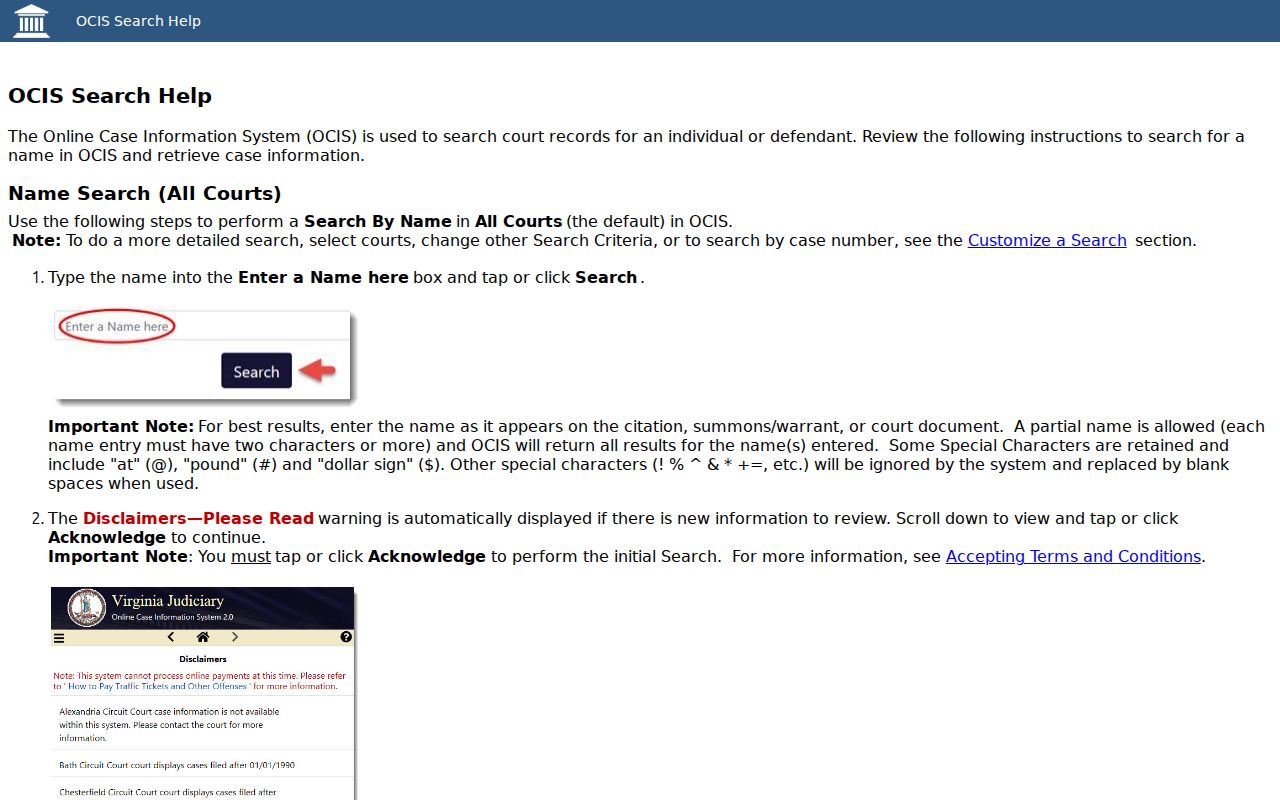
The view shows the public search choices on Virginia's OCIS help page, not any person's results. Use the fields to find a case. Then ask the court that owns it. Note: A case search points you to the right court, but only the court and serving agency can confirm current process records.
What a Virginia Warrant Search Asks For
Virginia's public OCIS form never asks for a warrant number, a birth date, or a county-only warrant category. It asks for a case search mode first. The fields then follow that mode. A name search needs a name. A case-number search needs the number plus one court. A hearing-date search needs a date, and court level and locality can narrow the query when the mode allows it.
| Field Label | Type | Required | Notes |
|---|---|---|---|
| Search By | Selector | Yes | Choose Name, Case Number, or Hearing Date before entering the matching search value. |
| Court Level | Selector | No | Options include Circuit Court, General District Court, and J&DR Court; available records depend on coverage and access rules. |
| Court | Searchable selector | Only for case number | Name and date searches can use the available all-courts selection; a case-number query needs one court. |
| Enter a Name here | Text | For name search | Partial names are allowed. Each name entry must contain at least two characters; the name on court papers is the best starting point. |
| Enter a Case Number here | Text | For case-number search | Use the exact number from the court paper and select its court. OCIS examples include GT, CR, and JA case formats. |
| Hearing Date | Date | For date search | Enter a date in MM/DD/YYYY format and choose available court filters as needed. |
| Date of Birth | Not offered | No | The public help lists no DOB field. Give identifying details directly to the clerk or warrant desk when confirming your own case. |
Use search terms and records for one specific case question. Virginia's OCIS prohibits automated scripts, data mining, and excessive access under its terms. If the portal returns several names or no match, do not guess which record is yours. Use the court's locality and case number when available. Then ask the clerk to verify the correct file. Note: OCIS asks for no birth date and exposes no universal warrant number to narrow a public search.
Virginia VCIN Warrant Data Stays Restricted
Virginia State Police runs the Virginia Criminal Information Network, VCIN, and supports its connection to the FBI's NCIC network. Both systems carry law-enforcement data for authorized users. The public cannot query either one. A clerk or records officer cannot convert a public OCIS search into a VCIN/NCIC check for a private person. No statewide Virginia warrant database hides behind the court search. Virginia Code §19.2-390 requires felony arrest warrants and capiases to reach VCIN and NCIC within 72 hours after receipt. Removal follows destruction under the same statute. That rule creates a data path for law enforcement. It does not put every traffic, misdemeanor, or local process entry into a public portal. It also keeps the entry itself and its update time hidden from view. A name missing from OCIS proves nothing about what Virginia law-enforcement records hold. The Virginia State Police VCIN description explains the network's role for justice agencies. It is not a public lookup page. Reading it grants no access to internal records.
Virginia Warrant Search Results
What you see in a public result is a court case, not a tidy warrant record. Virginia treats these files locally. So start with the court name and case number. Then look at the charge, the hearing date, and how the case ended. A service or process entry only tells you what that court typed into its file. It is not a live confirmation from the officer holding the warrant. No statewide status-code list exists either. "Pending," "open," "current," and "served" can mean different things in different Virginia localities. The public OCIS instructions also give no statewide warrant-number format. The pattern CR12345678-90 is just an illustrative criminal case number from official help, not a Virginia warrant number. Only the court can say whether a separate warrant or capias was issued and which order now controls the case.
| Warrant Number or Case Reference | OCIS publishes case-number examples, not a public statewide warrant-number schema. A court paper's case number helps the clerk locate the file. |
|---|---|
| Defendant | The name tied to the case. Confirm spelling and identity with the court rather than relying on a name match alone. |
| Charge and Code Section | The listed allegation and code reference; a charge is not a conviction and does not itself show that a warrant is active. |
| Court and Hearing | The court, offense date, and hearing date help identify the file and the next court event. |
| Disposition | A recorded outcome may appear in case details. Ask the clerk whether any separate process was recalled or remains outstanding. |
| Service or Process | Some details may appear where the court entered them. JDR records omit some service data, and a public entry is not a current law-enforcement confirmation. |
| Bond Terms | OCIS does not provide one statewide warrant bond field. Ask the court or magistrate which case-specific terms apply. |
The official OCIS 2.0 case search offers no universal filter that sorts matters into active, cleared, or recalled. A result that stays silent on process leaves a real gap. Ask the court and the serving agency separately in that case. You can open the Virginia OCIS search screen and study its fields before running any query. Those fields locate public court data in Virginia, not a person's law-enforcement record.
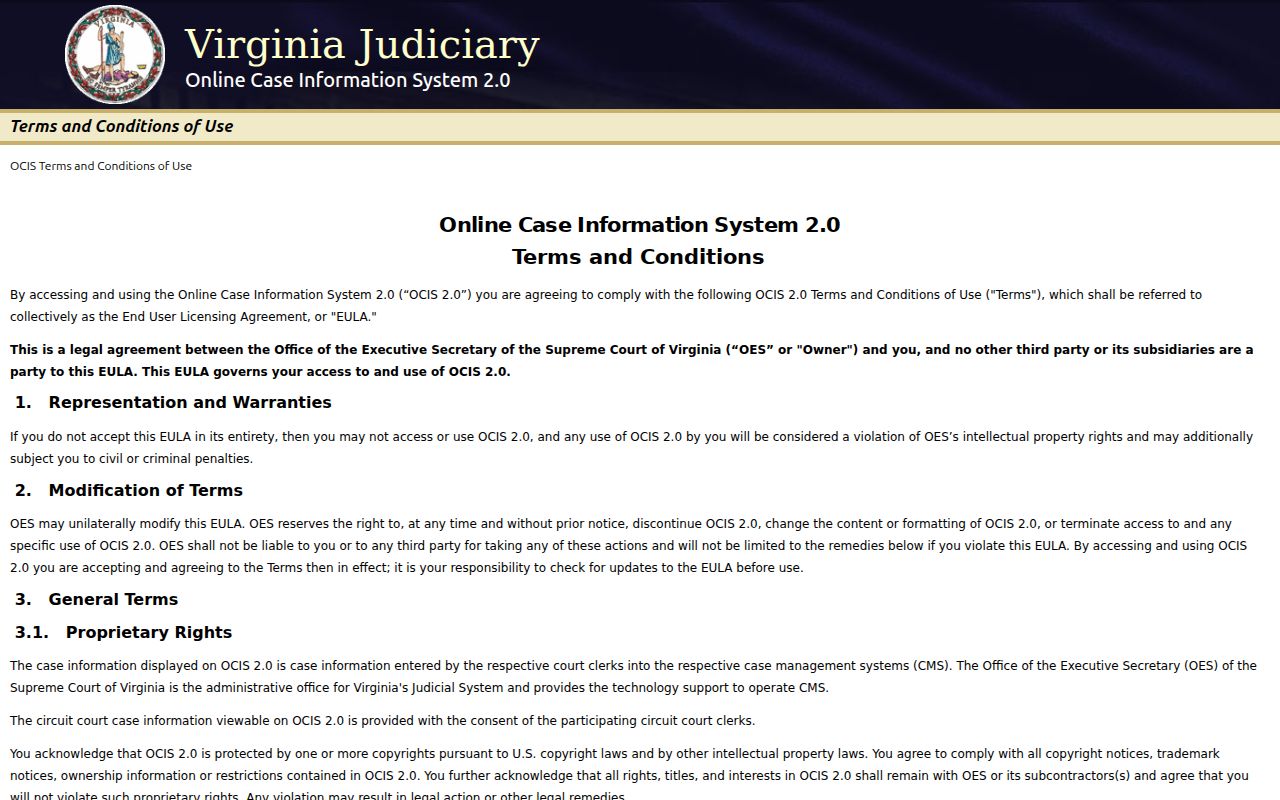
The entry interface you see carries no case result by itself. A search should stop at locating the court record. Turn to the clerk and the local agency for current process status. Note: a case status or service event does not certify that an arrest warrant is still active or has been recalled.
Virginia Warrant Records by Court
Knowing the court level tells you which clerk holds the file. Circuit Court clerks keep felony files and the criminal-process records tied to them. General District Court clerks are the starting point for adult misdemeanor, traffic, ordinance, and preliminary felony matters. Juvenile and Domestic Relations District Court clerks handle juvenile, support, and family cases, where public access runs narrower. A city criminal or traffic case normally sits in that locality's General District Court, since Virginia has no separate municipal-court tier. If the level is unclear, the summons, citation, case number, or hearing notice usually points the way. The Virginia Judiciary's case-information entry point and court directory can route you to the right clerk. Court records and agency records are different things. The Supreme Court of Virginia clerk-record guide explains that a request for a court file should go to the clerk who maintains it, not to some general agency FOIA office. For a personal check, ask the clerk three things: whether the case carries a capias, arrest warrant, or other process entry; whether the court has entered a recall or destruction order; and what appearance or motion process applies. A portal can locate the file. But the clerk's record and the judge's order govern the case in Virginia.
Virginia Warrants: Who Holds What
Virginia keeps its public court data separate from the record used to execute a warrant. OCIS shares selected case details. The issuing clerk holds the local court file and order. The sheriff or police department assigned to serve the process is the one that confirms service status and local appearance procedure. VSP administers VCIN, an internal law-enforcement network that is not a public search. No single portal answers all three questions. The court tiers split the work. General District Court serves county and independent-city localities for traffic, misdemeanor, and ordinance matters; Circuit Court handles felony trials; JDR handles juvenile and family or support matters. Magistrates issue warrants and hold initial bail proceedings, but they are judicial officers, not another court tier. A city case still routes through that locality's state court and its responsible sheriff or police agency. Use Browse Counties to reach the correct locality rather than assuming a Virginia-wide search covers every local record. For a local example, a representative sheriff page posts instructions for its own warrant desk. The Fairfax County Sheriff's FAQ directs callers to the warrant desk for confirmation. That is one local contact route in Virginia, not a statewide office or state portal.
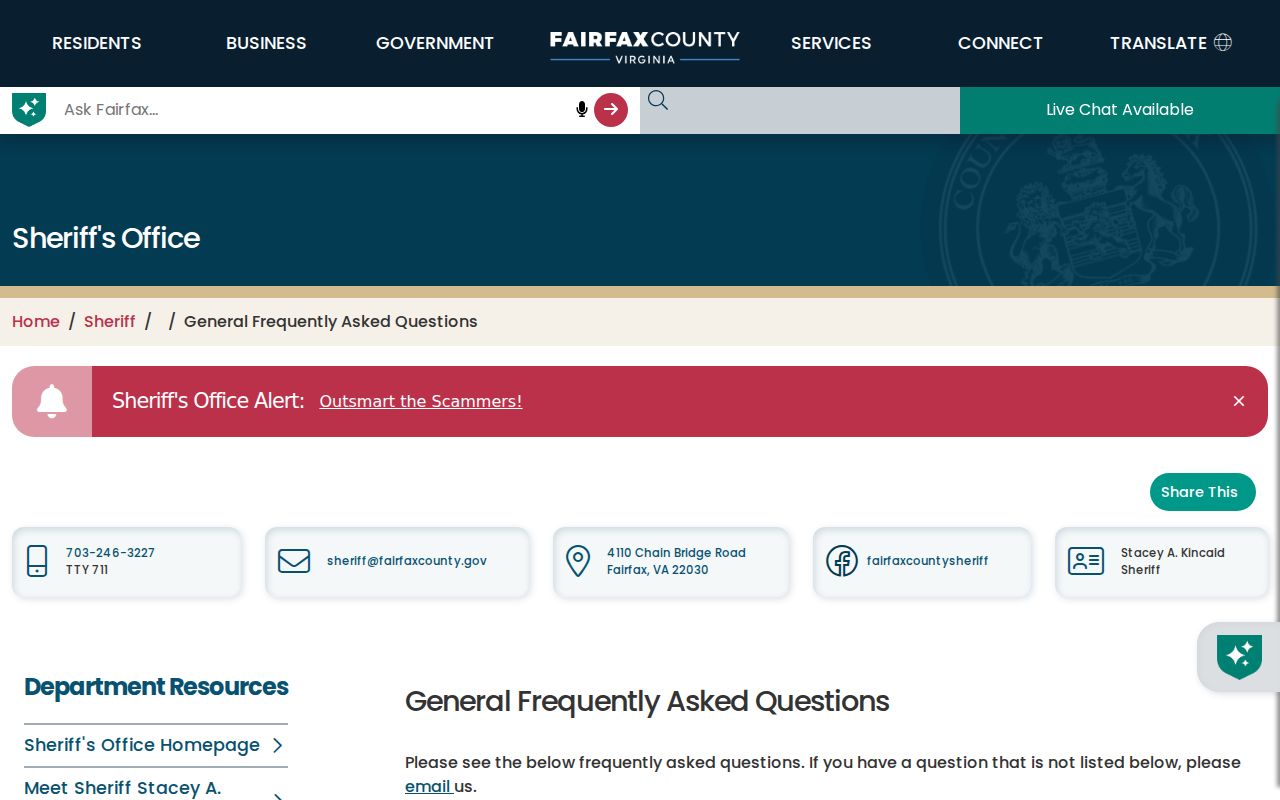
That agency instruction is not a person's warrant result. Follow the contact route for the locality that issued the process. VSP also posts selected notices through its Wanted Persons program. That page works as a tip route, not a complete warrant search or a personal status channel. Virginia has no separate municipal or justice-of-the-peace court tier, so city criminal and traffic cases route through the state courts for that locality.
Virginia Warrant Records Under VFOIA
Virginia treats public records as something you can ask for directly. The Virginia Freedom of Information Act gives the public a route to request an existing record from a public body, described with reasonable specificity. It has real limits, though. VFOIA does not open VCIN or NCIC, does not force an agency to build a new statewide warrant report, and does not replace a request to the clerk for a court record. The clock matters. Under §2.2-3704, a public body generally sends an initial response within five working days. That reply can take a few forms. The agency may provide the record. It may cite a lawful withholding basis, state that the record cannot be found, or invoke an allowed extension. The Virginia State Police accept requests through their preferred portal, and they also list mail, fax, email, in-person, and phone methods. Costs may apply. VSP may require a deposit when the expected charge exceeds $200. Court records run a separate route. The Supreme Court's clerk-record guide describes it. There, you name the locality, the court level, the case number if known, the approximate date, and the precise public record sought, and you skip any request for restricted network data. The Virginia State Police FOIA page lays out the request channels. It also spells out your public-record rights, without exposing any submitted request.
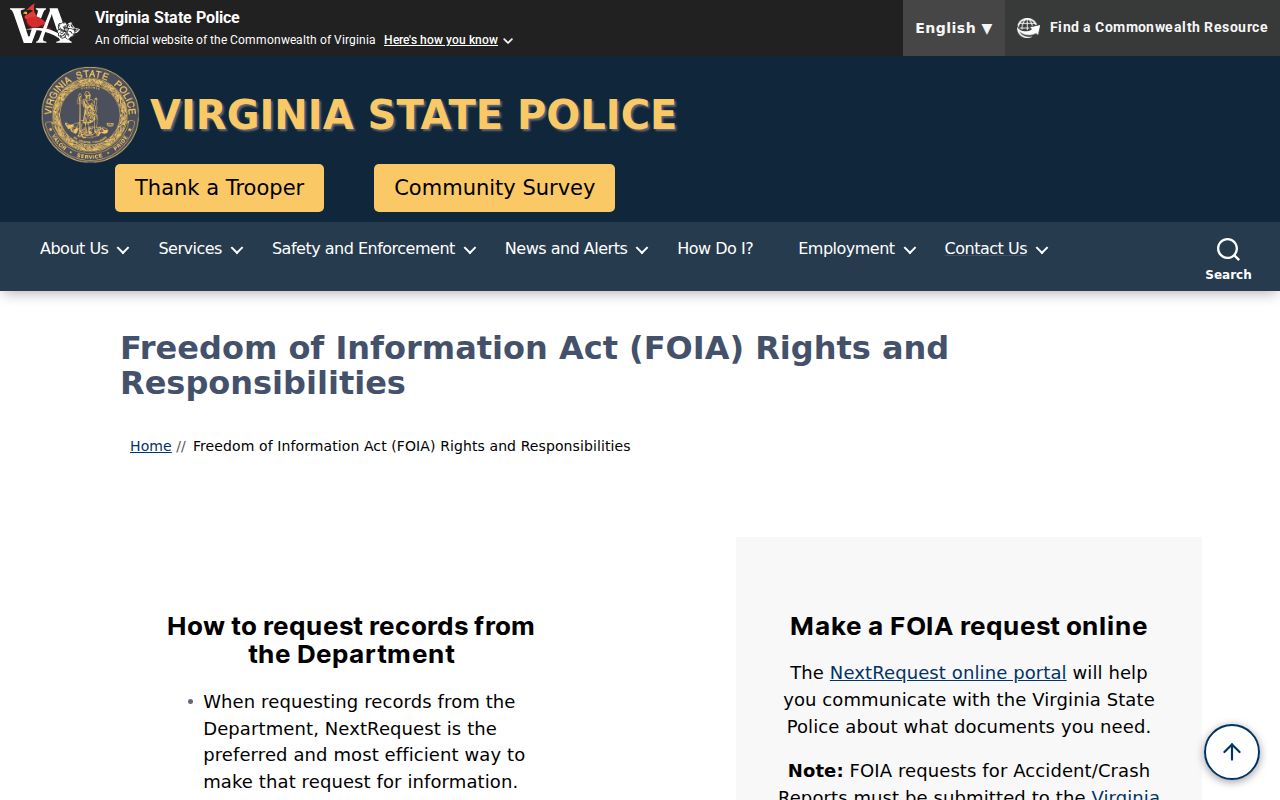
VSP's information page is one way to ask the agency for an existing public record. Virginia court files go to their own clerks. Local sheriff and police records stay with those offices. Note: VFOIA's initial response deadline is not a promise of immediate record production or warrant confirmation.
Which Virginia Warrants Stay Restricted
Access in Virginia turns on the record type and the case. Virginia law keeps juvenile law-enforcement records confidential except for defined access categories. JDR case displays leave out some complainant and service details. Criminal investigative records have their own FOIA exclusions. None of this seals every arrest warrant. Ask the clerk which parts of a court file are open to the public. Ask the law-enforcement office that holds the agency record whether any existing document can be released. Do not go digging in internal VCIN or NCIC fields. A public Virginia case result can be incomplete or out of date, and records that are not displayed cannot establish that a warrant does not exist. For a personal status check, one step matters. Confirm the court's order with the agency responsible for serving it.
Key rules: OCIS is not a warrant register; VCIN and NCIC are restricted; juvenile and investigative records have separate limits; and the search-warrant affidavit rule does not apply to every arrest warrant.
Virginia Search-Warrant Access Is Different
Virginia handles search-warrant papers differently from general arrest-warrant records. The rules live in Code §19.2-54. There, the search-warrant application and affidavit generally become open for public inspection after the warrant is executed or 15 days after issuance, whichever comes first. A judge may still seal them temporarily. Good cause is required. That timetable governs Virginia search-warrant paperwork only. It sets no 15-day release rule for every arrest warrant or criminal investigation record in Virginia. Be precise with the clerk. Name the Virginia court, the case number, and the document you want. Be just as precise with an agency. Request an existing public document, and expect that investigative or confidential material may be withheld under a separate rule. A missing affidavit in Virginia proves nothing about whether the court issued a warrant. The clerk can explain what belongs to the public case file, and the sheriff or police unit responsible can confirm the execution record for its process. Note: Virginia's search-warrant affidavit timetable does not turn a public case search into an arrest-warrant status check.