
How Arrest Warrants Work in Virginia
A Virginia arrest warrant is a court's written order letting an officer take a named person into custody and bring that person before a judge. State law lays out the path. A complainant appears before an authorized judicial officer and swears to the facts under oath. If those facts add up to probable cause, the officer issues the warrant. The paper itself names the accused, describes the offense, says which officer may execute it, and identifies the court the person must face. Be careful with the word itself, though. Virginia papers also use "warrant" for search warrants and civil process. A search warrant permits a defined search, not an arrest. A civil warrant in debt starts a money claim and authorizes no arrest at all. Missed court dates raise a different possibility: the paper may be a bench warrant, capias, or attachment rather than a new arrest warrant. Read the actual case record before choosing which procedure fits, because the label drives what you do next.
Virginia Magistrates Issue Arrest Warrants
Virginia Code § 19.2-72 governs when arrest process may issue in the state. The law works like this. An authorized judicial officer hears the complainant and any other witnesses under oath. A written complaint is required whenever the complainant is not a law-enforcement officer, and it is required for a felony no matter who complains. Finding probable cause, the officer issues the warrant, subject to an added authorization rule for certain felony complaints brought by someone outside law enforcement or animal control. The statute spells out the contents too. The warrant must be directed to an appropriate officer, name or otherwise identify the accused, state the offense with reasonable certainty, command the arrest and production before a court with jurisdiction, and carry the issuing officer's signature. After arrest, the person goes before the court for the next step. Release terms are a separate judicial decision. The official text, including the conditions described here, is the current Code of Virginia § 19.2-72 page from the state's legislative information system; it shows the statute itself, not any person's warrant.
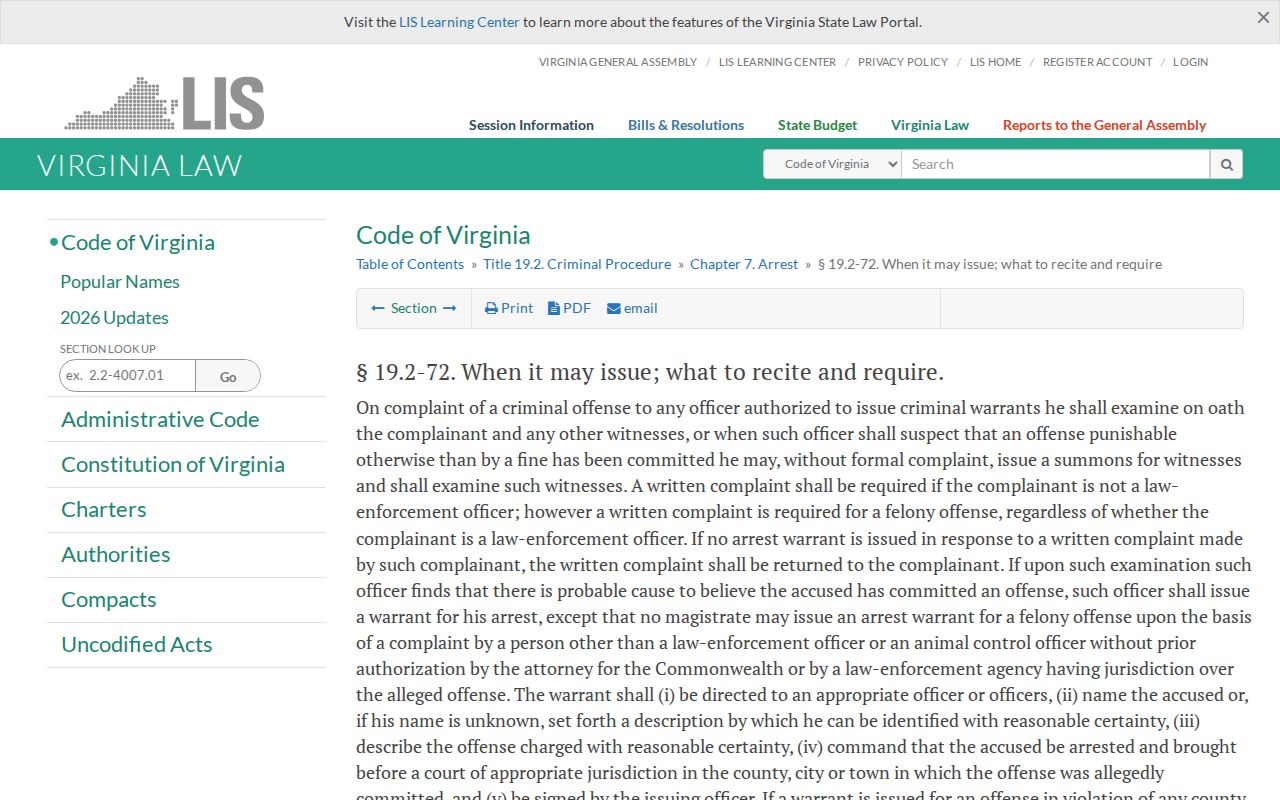
Authorized judicial officers, not just one court tier, can issue this process in Virginia. So the court that eventually hears the case may not be where the warrant began.
Arrest Warrants: What They Contain
Virginia law builds the warrant around a few required pieces of information. It must identify the accused, or give a description that can identify the person with reasonable certainty. It must describe the alleged offense, direct an appropriate officer to make the arrest, and name the court where the person must be brought. A case reference and an issue date help the clerk and the service agency pull up the same matter. Some warrants also tie to a bond or release order, though those terms depend on the case and any later judicial action. Keep in mind how the record is actually held. The court keeps the case file, while a local police or sheriff's unit keeps the service record, and only authorized agencies can reach restricted VCIN/NCIC entries. Public case information is selective, and some case types carry stronger privacy limits. So a missing detail on a search screen is not proof the detail does not exist; ask the clerk what the full record shows.
| Locality and court | The city or county and the court responsible for the case. The right clerk depends on whether the matter is in GDC, Circuit, or JDR. |
|---|---|
| Case reference | The case number or other court identifier from the citation, warrant, or docket. Use the number as printed; no universal public warrant-number pattern is documented. |
| Process and offense | The instrument type and the alleged charge or code section. The document states the offense with reasonable certainty. |
| Issue and judicial authority | The date and issuing officer or court. Public case results may not show every process field. |
| Service or return | An execution or attempted-service event where it is entered. The local law-enforcement record may be separate from the court's public docket. |
| Bond or release terms | Terms set by a judicial officer, if any. Confirm the current order with the court rather than inferring it from an older entry. |
Virginia Arrest and Search Warrants Differ
The two documents authorize different acts. An arrest warrant lets officers take a person into custody. A search warrant lets officers search a specified place or item under its terms. Virginia also gives search-warrant material its own access rule. Under Code of Virginia § 19.2-54, an application or affidavit becomes public after execution or 15 days after issuance, whichever comes first, unless a court temporarily seals it for good cause. That clock does not govern every arrest-warrant affidavit. The court file, the criminal-investigative record, and the restricted law-enforcement entry can each follow different access rules, so the same document may be public in one place and closed in another. A clerk can explain what public record exists for the case. Where a record is held by a public body, a request under the Virginia Freedom of Information Act must describe the record with reasonable specificity. That request creates no right to query VCIN or NCIC, and legal exemptions may still limit release. A missing affidavit or docket attachment is not evidence that no warrant was issued. Ask the clerk which record can be inspected and whether a sealing order is in place.
How Warrants Get Served in Virginia
In Virginia, arrest warrants are carried out by authorized local officers under state law. Police investigate and ask for process. Sheriffs usually serve it. They also handle the jail and courthouse functions. The split varies by locality. So does the question of who originated the warrant. A sheriff's system may leave out cases that began with a police department, so ask which agency holds the specific paper. A local online warrant page, where one exists, shows only what that office publishes. After an arrest, the person goes before a judicial officer for the next court step, and bail gets decided where the law permits release. The court sets the case and any release terms. The serving agency then updates its execution record. Virginia State Police administers the state's criminal-information network, but the public cannot query that restricted system. A public case page may list a docket event without saying whether the law-enforcement entry has been validated, served, recalled, or removed. One Virginia example is the Fairfax County Sheriff's warrant FAQ, which points warrant questions to its desk rather than a public name-search form. Practice can differ elsewhere in Virginia.
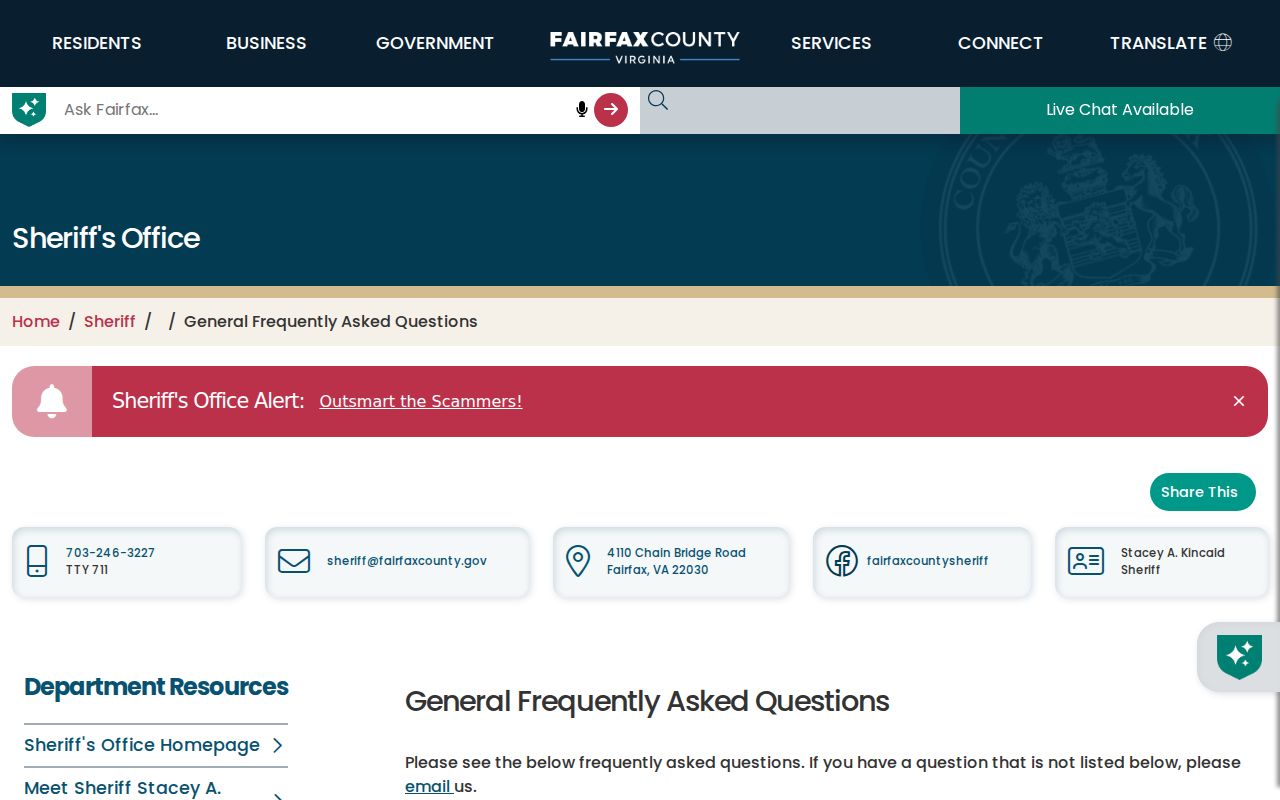
That one page cannot confirm a warrant in another Virginia locality. Start with the issuing court. Ask which agency received the specific process, then contact that agency for current execution details. The clerk comes first. The local sheriff or police warrant unit comes second. Use Browse Counties to pick the right Virginia county or independent city, and for a missed hearing see the Bench Warrant Lookup for that court-process route.
Virginia Arrest-Warrant Entries in VCIN
Virginia's eMagistrate is a secure court application, not a public warrant search. The Office of the Executive Secretary's 2007 report said every magistrate office used it by June 2005. The tool standardized common process and sent information to justice agencies. Virginia State Police's 2023 Facts & Figures report describes the next step. Magistrate warrants enter VCIN/NCIC automatically through the Supreme Court's eMagistrate interface. That is a law-enforcement data route. The public has no access to the entry. The same report counted 667 local, state, and federal member agencies. It logged 180,862 warrants entered in 2023. Those numbers measure participation and annual entries, not active warrants, unique people, or anything a resident can view. Authorized agencies validate and update the data under their own procedures. Virginia residents can read the VSP description of VCIN to understand the network's role. Searching its records is off limits. Virginia's public court tools and the internal warrant network answer different questions, so rely on the clerk and serving agency for current process even when an old entry looks complete.
Arrest Warrants, Summonses, and Bench Warrants
A summons tells a person to appear. It can replace an arrest warrant in some cases. A bench warrant is everyday language for process after a missed court obligation. Virginia's paper may instead carry the name capias or attachment. Each type starts differently, and the document itself states what is required. Skipping a summons can bring further court action. Read the docket alongside the paper. In Virginia, traffic and misdemeanor cases usually belong in the locality's General District Court. Virginia felony trials belong to Circuit Court, though a magistrate may issue the first process. JDR records cover juvenile, family, and support matters, with restricted public details. The issuing court's clerk can identify the case. The local service agency confirms its own execution status.
| Feature | Arrest Warrant | Summons | Bench Warrant |
|---|---|---|---|
| Purpose | Authorizes arrest and production before a court | Directs a person to appear at a stated time | Common term for court process after a missed obligation |
| Starting event | Sworn complaint and probable cause | Charging or court decision to require an appearance | Missed date, release-condition issue, or another court order |
| Virginia record label | Arrest warrant | Summons | May be capias, attachment, or other process |
| First contact | Issuing court and responsible service agency | Issuing court clerk and date on the summons | Court clerk for the underlying docket and missed event |
Virginia Arrest Warrants: 3- and 7-Year Review
Virginia law sets a review for some unexecuted criminal process. It sets no automatic expiration date. Under Code of Virginia § 19.2-76.1, local law-enforcement officers report felony arrest warrants left unexecuted for seven years. Misdemeanor warrants, summonses, capiases, and other process come in at three years. These are the three-year and seven-year reviews. The Commonwealth's Attorney petitions Circuit Court to destroy eligible process. The court makes the order and may preserve process where the statute allows. Age alone does not cancel a Virginia arrest warrant. A destroyed warrant cannot support a later arrest. Under Code § 19.2-390, the agency destroying the process must also clear the related VCIN/NCIC information. For an old Virginia case, ask the clerk whether the court entered a destruction order. Then ask the police or sheriff's unit, too.
Handling an Arrest Warrant in Your Name
A warrant in your own name is unsettling. Treat what you find as a lead, not a verdict. Start with OCIS 2.0, where a search by the name printed on the court paper, a case number, or a hearing date can surface Virginia case information. Then call the clerk of the issuing court. Ask whether process was issued, whether it is still active, what appearance or recall route applies, and what order controls bond. Follow up with the local police or sheriff's warrant unit to learn who holds service and how voluntary appearance works. Practice varies by locality, and a clerk's docket cannot update the enforcement record on its own. The official district-court criminal-forms index lists Virginia forms by name and number, which helps you identify the paperwork a court uses. It is a catalogue of forms, though, not a warrant checker or any person's record.
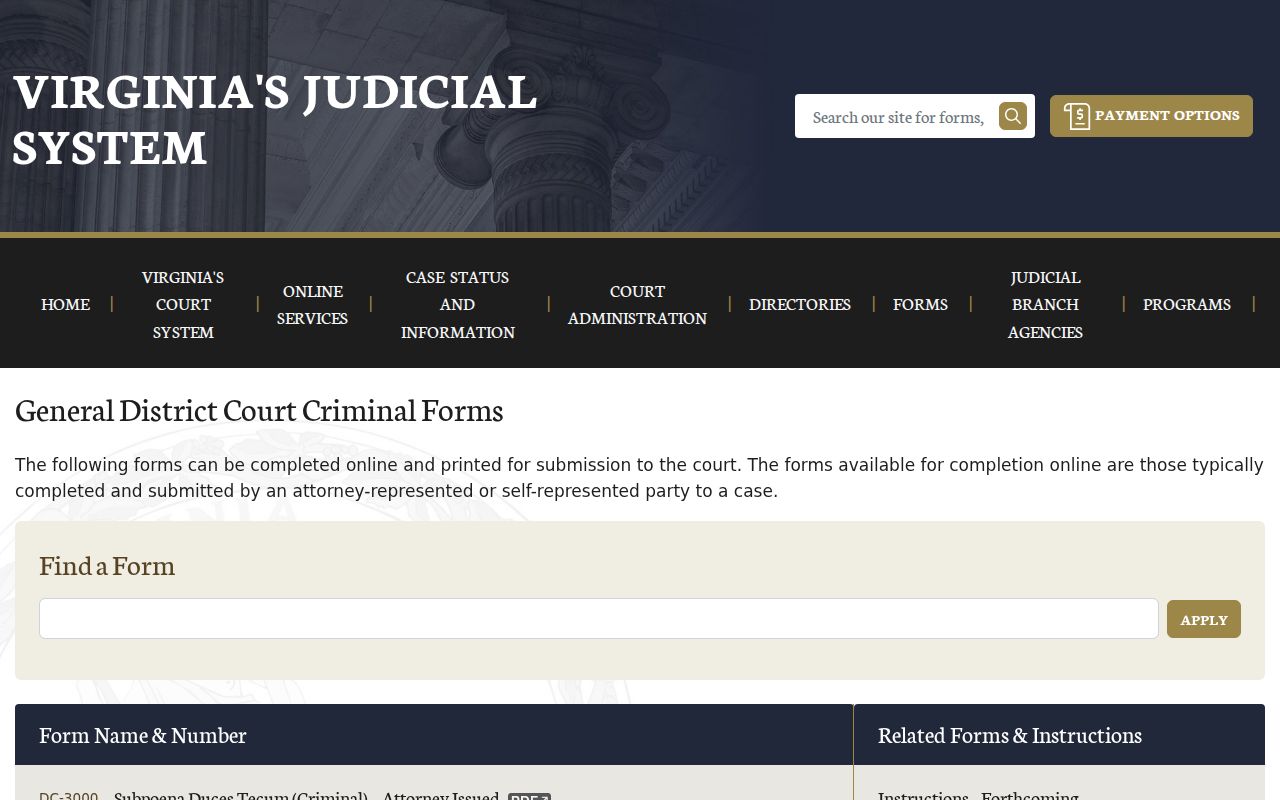
Which order applies to your case is a question only the issuing court can answer. A form's title in the official index describes process, nothing more. Local lists help, though. A Virginia locality may post a sheriff or police warrant list, but the data can be stale or narrow, so check the posted date and call the agency handling the case. To request a record, follow the agency's FOIA process; the VSP FOIA page lists methods for requesting records held by state police. The VSP Wanted Persons program is a tip channel for the public, not a full warrant search for your own name.
- Gather the citation or case number, the locality, the name used in court, and the approximate event date.
- Search public case information and contact the clerk about the current order and available hearing or motion process.
- Ask the sheriff or police unit about service, surrender, booking, and any court-set bond terms before traveling.
- Consider counsel, especially when a criminal charge, prior missed date, or interstate issue is involved.
- After the court acts, keep the signed disposition and confirm the agency has updated its process record.
Important: If current arrest process may apply, get instructions from the issuing court and responsible local agency before going to a courthouse, jail, or police station.
Federal Arrest Warrants in Virginia
A Virginia warrant search in state courts will not surface federal process. Federal criminal cases in Virginia fall to the Eastern District or the Western District, and a warrant there may be sealed or left out of public case results entirely. No single statewide federal check exists. The U.S. Marshals Service handles federal fugitive apprehension and executes federal court orders, working through regional task forces that pair federal, state, and local agencies. So where does a person look? The Eastern District of Virginia court website lays out official court and division information, including how its docket search works. A docket search can turn up a public case tied to a Virginia federal warrant. It cannot rule out a sealed one. The Capital Area Regional Fugitive Task Force page describes that joint enforcement program itself, not warrant records. Treat these as starting points for understanding federal process in Virginia, not as an active warrant lookup. Only the issuing federal court can confirm what it has signed.
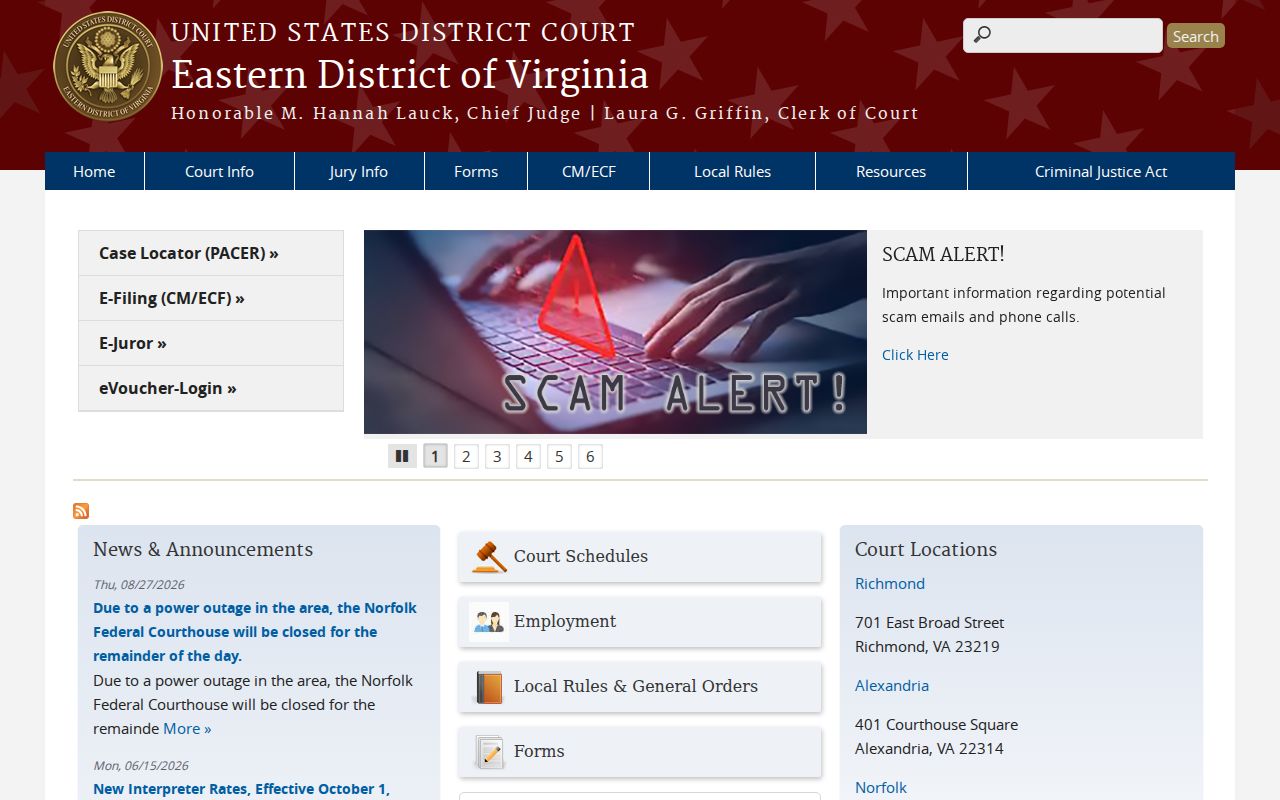
Federal process is different. For a personal federal question, contact counsel, the issuing federal court, or the right Marshal office. A Virginia local matter goes back to the locality's court and its police or sheriff's service unit instead.