
How Traffic Warrants Work in Virginia
Every traffic citation opens a case in the General District Court for the county or independent city where the stop happened. You can pay an eligible ticket before the hearing. Or you can show up and contest it. Skip a summoned hearing, though, and the judge may issue further process based on the law and the facts. Virginia courts call the instrument a capias, an attachment, or something else entirely. Read the docket and the actual order rather than trusting a generic "traffic warrant" label. Virginia also has no separate municipal or justice-of-the-peace tier; city and county traffic cases alike land in the local General District Court. One distinction trips people up. A missed hearing and an unpaid balance after judgment are different events. Owing money alone does not mean an arrest warrant exists. Pull the case record. Then ask the issuing Virginia court directly which order, if any, was entered.
- FTA
- Failure to appear for a required court date.
- Capias
- Court process directing that a person be brought before the court.
- Recall
- A court's act of withdrawing process or setting a new hearing.
- License hold
- A restriction on a license; it is not itself a warrant.
Virginia Traffic Warrant Process After an FTA
Virginia's failure-to-appear law targets a willful absence in a covered case. Willfulness means intentional conduct aimed at dodging judicial process. The current statute tells a court to weigh listed mitigating circumstances, such as an unforeseen illness, transportation trouble, no way to arrange care for a dependent, or steps taken to communicate about the absence. Consequences can follow a missed date. Still, the missed date alone never reveals which process the judge signed. Hang onto the summons, the notice, or the case number. If a medical or transit emergency caused the absence, save the records and tell the Virginia court promptly. The clerk can pull up the case, name the hearing you missed, and say what order was recorded. A lawyer can help you present the facts well. One caution: the statute hands the court a standard to apply, not the public a code for guessing whether a warrant is active. Read the current Code of Virginia § 19.2-128 for the FTA rule and its mitigation provisions. Note: a missed date alone does not show whether the court issued a capias or whether that process remains active.
How Virginia Flags a License Hold
Virginia offers no public statewide FTA or traffic-warrant license-hold lookup. There is no OmniBase-style portal where you type a driver's-license number, name, or citation to find and pay a warrant-related hold. That gap shapes everything. A Virginia traffic-warrant check begins with the court case and local process, never with a statewide hold search. The state's systems answer different questions. OCIS 2.0 is a public case-information service anyone can use. VCIN and NCIC are restricted criminal-justice networks closed to the public. A local clerk can confirm the court's docket and orders. The sheriff or police agency handling service can explain its own execution record. DMV handles separate driver and registration status, but it cannot recall court process.
| Record or channel | Public access | What it can confirm |
|---|---|---|
| OCIS 2.0 case information | Public search for covered cases | Selected case, hearing, and disposition details, not a full warrant status |
| VCIN / NCIC warrant data | Restricted to authorized agencies | Law-enforcement information; no public search |
| Local court docket | Public case tools and clerk request, subject to access limits | The issuing court's case, order, and process |
| DMV driver record | Personal DMV account and service channels | License or registration status, not a court warrant |
Virginia Traffic Warrants and DMV Suspensions
One big change came on July 1, 2019. Virginia DMV stopped suspending licenses solely for unpaid court fines and costs that day. The agency lifted suspensions imposed for that reason alone and waived the related reinstatement fees. But the change did not erase a court debt, dismiss a ticket, recall a capias, or block a separate suspension with another legal basis. You may still owe court costs or need to answer a case even after an old suspension was lifted. A current license restriction may rest on entirely different grounds. So ask DMV about license status, and ask the Virginia court about the case and any process. The DMV's fines and costs page lays out the policy and the line between court debt and license suspension.
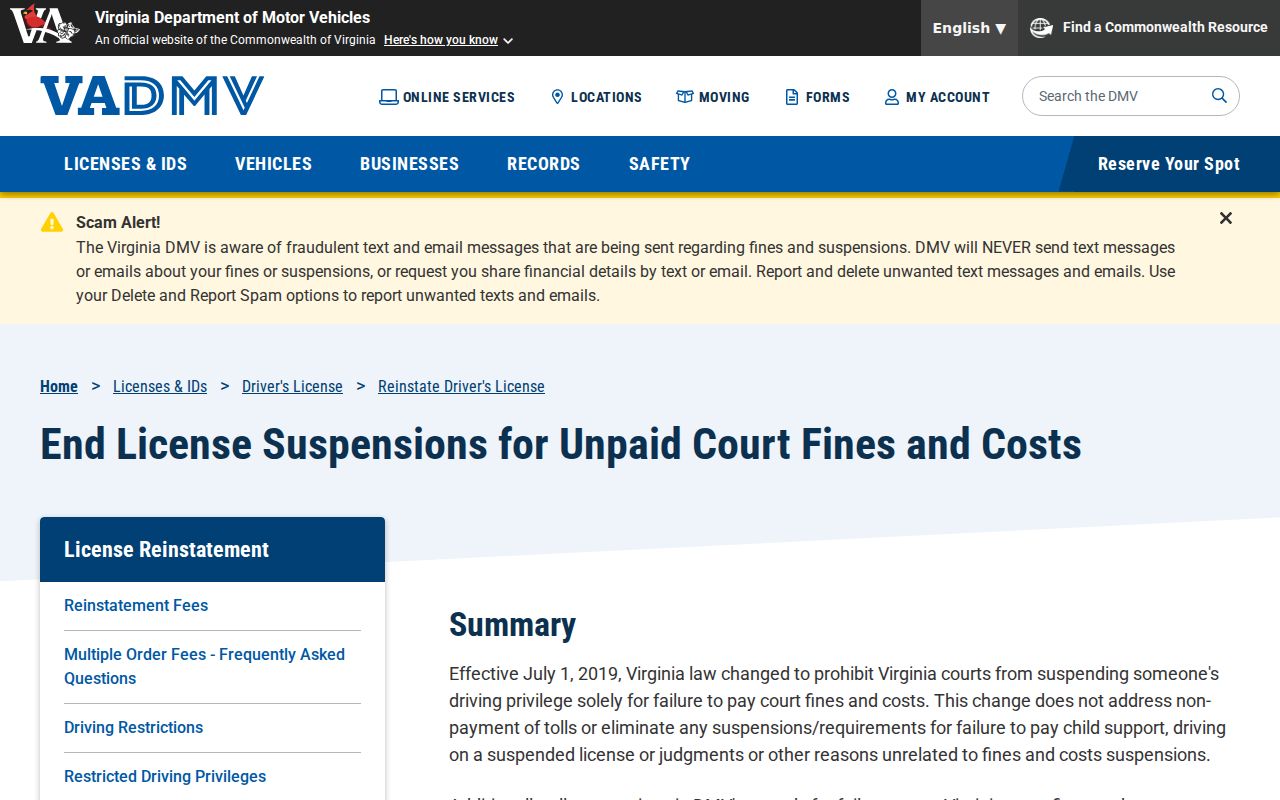
That DMV notice helps separate an old fines-only suspension from a live Virginia court warrant. It says nothing about the court matter ending. Note: the DMV policy changed license consequences, but it did not decide the status of an individual court case.
Virginia Traffic Warrant Checks
Start with the paperwork in hand. The summons, citation, or case paper names the Virginia locality and the court that owns the case. Copy the case number exactly as printed, since formats vary by court. For an online warrant check, OCIS 2.0 covers General District Court traffic and criminal matters plus selected Circuit Court cases, and it lets you search by name, case number, or hearing date. A hit only finds a case, though. It is not live proof that a warrant exists. A blank result does not rule one out either. The older GDC search makes you pick one court at a time, so know the locality first. The clerk of the issuing court can confirm what the official file holds and whether any order issued. For execution or appearance details, ask the sheriff or police department that handles service in that Virginia spot. The official GDC search help page walks through the court selector and every search field the portal offers.
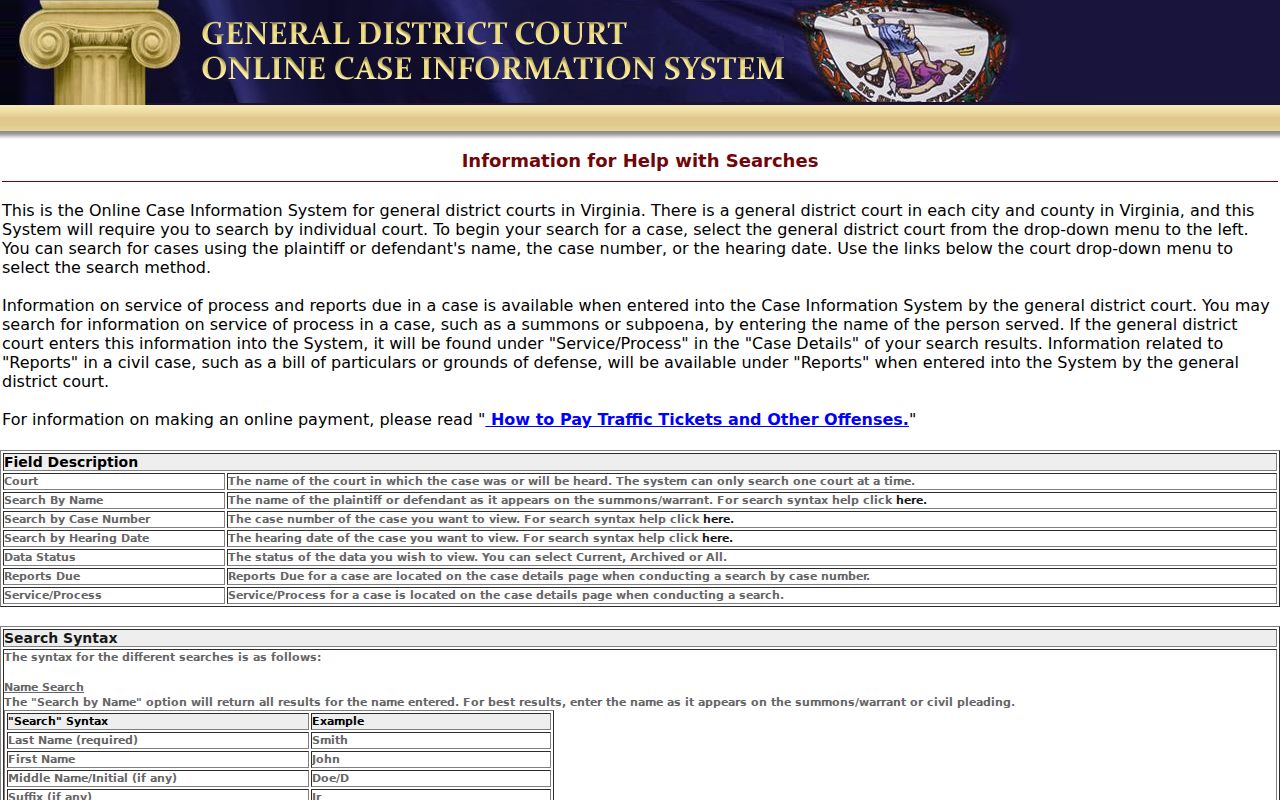
Open Browse Counties and pick the exact Virginia county or independent city printed on the ticket. A neighboring locality does not own the case.
- Read the locality, court level, case number, and hearing date from the ticket or summons.
- Search OCIS 2.0 using a supported field and the exact locality or case details.
- Call the local GDC clerk to ask what process followed the hearing and whether it remains active.
- Contact the responsible sheriff or police office about its service record and local appearance steps.
- Use DMV only for an independent license or registration question; it cannot confirm a court warrant.
Virginia Ticket Prepayment Can Waive a Hearing
Paying a ticket before the court date is a legal option in Virginia, but it carries real consequences. When the offense sits on the state's uniform fine schedule and involved no property damage or personal injury, sending payment without a written waiver and guilty plea counts as both: the hearing is waived and a guilty plea is entered. Read the ticket, confirm eligibility and the deadline, and know the case effect first. If a warrant or capias is already in play, paying does not mean the court recalled it. The Supreme Court's ticket and GDC payment instructions lay out the online process, note the 4% convenience charge for credit or debit payments, and warn that prepaying gives up the right to appear. That court page is what the ticket portal guidance reflects. Before deciding on a covered infraction, review Code of Virginia § 19.2-254.1, which sets the rules for prepayment.
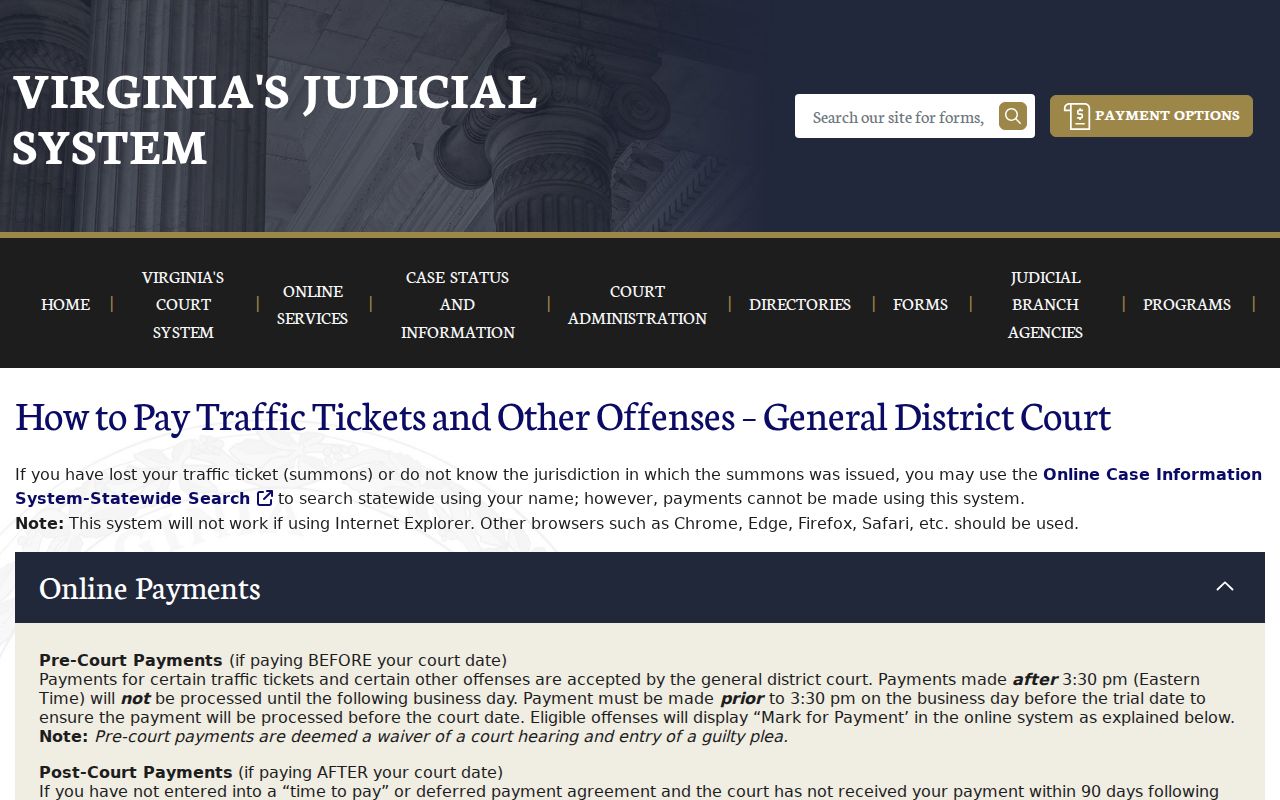
Keep your receipt. Then ask the Virginia court clerk how payment moves the docket and any separate court process still open on the case.
Clearing a Virginia Traffic Warrant
The court that issued the citation owns the case. Its clerk can explain how to get a hearing, set up a payment arrangement, or ask the court to recall the process. A sheriff or police department speaks only to its own service record. Virginia has no statewide warrant-clearing form and no public fee schedule for this. A payment plan, indigency review, or community-service credit may be available, so ask the clerk how that locality handles it. A driver who cannot pay all at once should ask the court about options rather than assume the case has no fix.
- Confirm the citation, case number, court, and any order with the clerk.
- Ask whether the court will set a hearing, accept payment, consider a plan, or require a motion.
- Before acting, understand whether prepayment would waive a hearing or enter a plea.
- If the court recalls or changes process, obtain the order or docket update and ask when records will refresh.
- Confirm any execution or appearance question with the local agency responsible for service.
Pause before paying: A court payment may not recall existing process. Ask the clerk what order is needed, and confirm any service update with the responsible local police or sheriff.
Note: Virginia DMV cannot recall court process, and court payment records may update separately from local agency records.
Virginia Traffic Warrant or Driver Record
A traffic warrant is court process tied to a case. A driver record is DMV data on a license or registration. The two live with different offices and answer different questions. Court costs can still be owed after the old fines-only suspension policy ended, and a license suspension can exist with no warrant at all. One result never answers the other.
| Question | Traffic case or warrant | Driver record |
|---|---|---|
| Custodian | The issuing General District Court; an agency may hold its service record | Virginia DMV |
| What it covers | Ticket, hearing, plea or disposition, balance, and court process | License status and driving privileges |
| Public route | OCIS or local case search, then the clerk and responsible agency | DMV account or customer service for the driver's own record |
| What it cannot prove | A DMV result cannot show whether court process is active | A court result cannot settle a separate DMV suspension |
For license status, use DMV's official personal account and customer-service route. For the ticket or warrant, stay with the Virginia issuing court and its local service agency.
Who Serves a Virginia Traffic Warrant
The court record and the execution record do not always sit in the same office. The General District Court clerk can explain the hearing, any order, and the case docket. A sheriff or local police department may receive and serve the process, depending on how the case began. Never assume every Virginia traffic warrant sits with one statewide office or with the sheriff alone. Ask the clerk which agency got the process, then call that agency before you travel. When the online search comes up thin, request the court record from the clerk and ask the agency what it holds. The clerk's public-record request guidance explains how to ask, and the Virginia Freedom of Information Act governs requests to public bodies, though exemptions apply. Neither route opens VCIN or NCIC to the public. For the wider limits on public warrant searches, see Warrant Check, and use Browse Counties to find the right Virginia locality.
Check a Virginia DMV Payment Text
A text that demands payment on an overdue traffic ticket and threatens license or registration suspension may be a scam. Virginia DMV has warned customers about these messages and states plainly that it does not text people demanding fines or fees. Do not open an unexpected payment link or send a card number in reply. Track the case through an official court or DMV channel and confirm any amount with that office. The warning is separate from any court warrant. A fake message proves nothing about a ticket, a license hold, or a warrant. A real case still belongs to its issuing court, and license status belongs to DMV. Read the agency's own words on the official Virginia DMV scam alert, then verify the underlying issue on your own. Note: Virginia's 2019 fines-only suspension change did not erase court debt or settle a separate traffic case.