
How Virginia Warrants Are Tracked
There is no single public statewide warrant search in Virginia. Instead, the record path crosses courts, local service agencies, and restricted information networks. A magistrate or judge issues process under Virginia law. The originating court keeps its case file. A sheriff or police department receives the process for service, while required information may also be entered into the Virginia Criminal Information Network, or VCIN, and the FBI's National Crime Information Center, or NCIC. Those systems answer different questions. A public case search may show a hearing or a charge. A law-enforcement network can carry a wanted-person entry. The agency responsible for service can confirm how it handles execution. No public page combines these systems into a current statewide Virginia warrant status, and a warrant's public court record and its restricted network entry are never the same screen.
Virginia VCIN Is a Restricted Warrant Network
The Virginia Criminal Information Network is administered by Virginia State Police for authorized criminal-justice users. VCIN connects Virginia agencies with NCIC and other justice information systems. It can carry wanted-person and warrant information. But the public cannot log in, search names, or inspect a VCIN/NCIC record. Virginia State Police reported 667 local, state, and federal member agencies in 2023. That is an agency count, not a promise that every type of process appears in a public database or that every locality's data is visible. VCIN is an operational network. It is not a public case register, a self-check service, or a certificate that a warrant is active or clear. The official VCIN program page describes the network's government role, its restricted access, and what it does for Virginia public safety.
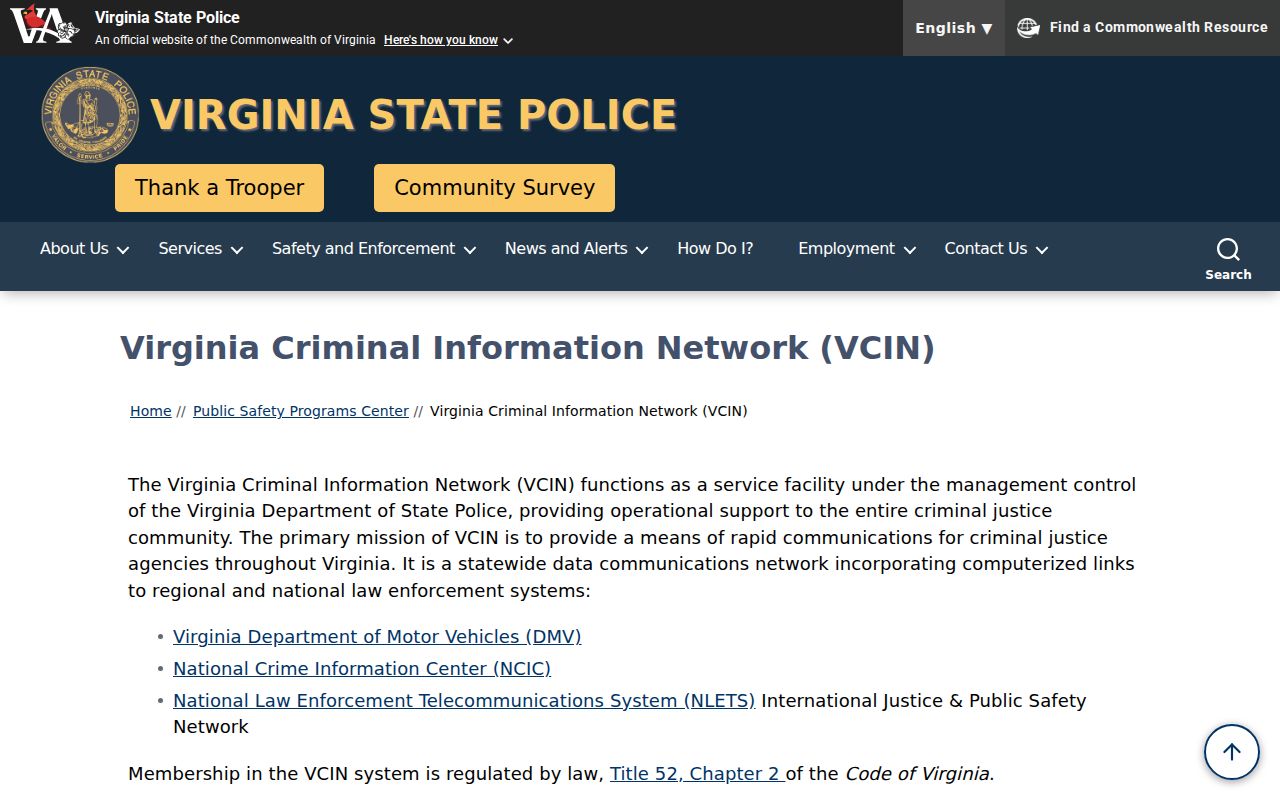
What Virginia publishes about VCIN is governance information. The official page shows how the restricted warrant network is run, not a record or query interface.
Virginia State Police VCIN Program
Statewide network administration and connection to justice-agency systems; not a public warrant desk.
The Virginia Warrant Database
Several Virginia systems get mistaken for one statewide warrant database. VCIN and NCIC hold restricted law-enforcement data. eMagistrate is secure court technology for creating and transmitting common process. OCIS 2.0 is public case information entered by participating court clerks. The VSP Wanted Persons page is a curated publication with tip contacts, and its coverage and users all differ. A public docket may help you identify the issuing court, but it does not expose the private network entry or guarantee that a warrant status appears. A curated public notice is not a full active-warrant list either. Absence from that page does not clear a local Virginia case.
| System | What it holds | Access and limit |
|---|---|---|
| VCIN / NCIC | Restricted wanted-person and warrant information used by authorized agencies | Not open to public searches |
| eMagistrate | Secure magistrate process creation, case text, and transmission to justice agencies | Internal court system, not a public portal |
| OCIS 2.0 | Selected adult case, hearing, charge, and disposition information | Public court-case search, not a complete warrant check |
| VSP Wanted Persons | Selected public notices and tip information | Curated page, not a searchable statewide roster |
Virginia's state-level network is only one part of the records path. The issuing clerk and the local sheriff or police agency hold the details needed to confirm a particular process.
Virginia Felony Warrant Entry: 72 Hours
Virginia Code § 19.2-390 requires the law-enforcement agency receiving a felony arrest warrant or capias to enter the required information in VCIN and NCIC within 72 hours. The rule also addresses Governor's warrants. It does not make every misdemeanor, local ordinance, juvenile, or civil process record visible in a public statewide search, and an agency database entry is not the court's order. Magistrate-issued Virginia process has an additional electronic path. Virginia State Police reports that warrants and protective orders created through the Supreme Court's eMagistrate interface are entered into VCIN/NCIC automatically. Those channels describe agency reporting, not public access to every court record. Read the text of Virginia Code § 19.2-390 for the reporting duty and removal provisions. The local agency that receives the process keeps its law-enforcement record, while the court retains the underlying case order.
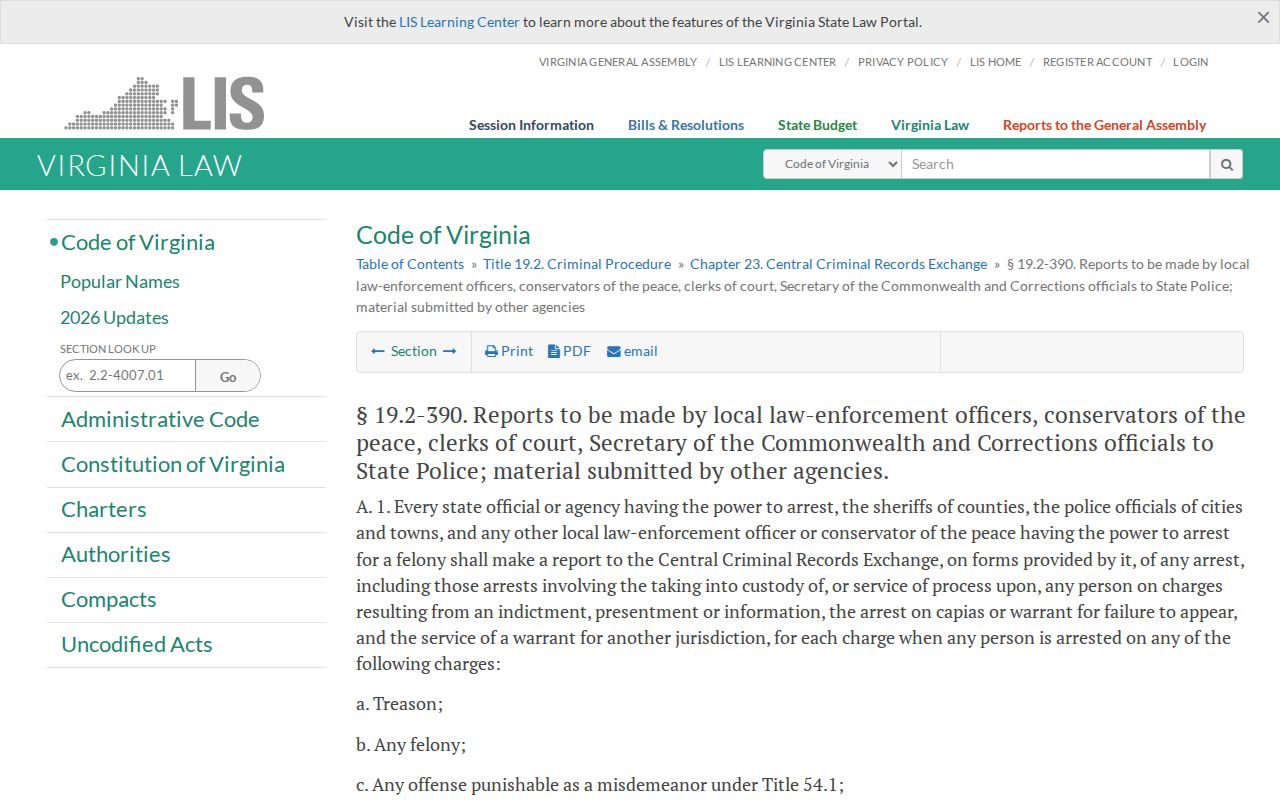
The statute's reporting rule concerns agency entries and updates. It governs how Virginia law enforcement handles records, not a public warrant-search feature.
From County Warrant to Statewide Index
A Virginia warrant starts with an issuing locality and court. A magistrate or judge reviews the complaint and issues the appropriate process. The court or magistrate transmits it to the service agency. Depending on the instrument, court technology and agency reporting rules can move selected data into VCIN/NCIC, where authorized agencies validate and act on entries. The public sees only the separate court information made available through a public service.
In short, the path is: local complaint or court event → Virginia magistrate or court process → sheriff or police service assignment → restricted VCIN/NCIC entry where required. A clerk's docket, an officer's service record, and a database entry can update at different times. A public OCIS result cannot guarantee that every one of those changes has taken place.
Authorized Virginia officers can serve process anywhere in the Commonwealth. The practical contacts stay local, though. The court that issued the warrant knows what order is in effect, and the serving agency can explain how execution and surrender work. To find the right office, use the Browse Counties directory. It leads to each county and independent-city site. Ask both about the same case. Note: Paying a case balance or seeing a docket change does not by itself prove that a linked VCIN/NCIC entry has been updated.
Virginia's eMagistrate Connects Courts and VCIN
Virginia put its magistrate work on one system. Every magistrate office has used eMagistrate since June 2005, a 2007 Office of the Executive Secretary report notes. The secure application standardized charge text. Magistrates could create common process on demand and push process and bail details straight to justice agencies. Virginia's court-to-agency workflow got faster. Even so, eMagistrate was never a public warrant portal. Around it sit systems doing related but separate work. eMagistrate creates and routes process, while VCIN and NCIC support restricted law-enforcement access and OCIS 2.0 publishes selected court-case data for the public. That split explains a familiar puzzle. A Virginia online search can show a case without exposing a warrant entry, or return no match while local process still needs confirmation. The Virginia Office of the Executive Secretary report records the statewide launch milestone, and later Virginia State Police reporting describes automatic magistrate-warrant entry through the eMagistrate connection. Virginia State Police logged 180,862 warrant entries in 2023. The totals were 171,864 in 2022 and 164,708 in 2021. The 2023 Facts & Figures report calls these annual entries. They measure activity, not how many people are wanted or warrants remain open.
Federal Fugitive Warrants in Virginia
Federal warrants run on federal process. Virginia's OCIS does not gather them as a complete group. The U.S. Marshals Service executes federal court orders and runs fugitive investigations with state and local partners. Its Capital Area Regional Fugitive Task Force works across Virginia and neighboring jurisdictions. That task force is not a public warrant list. Check federal and state records through their own offices. A Virginia clerk cannot recall federal process. A state case search will not settle it. If a federal warrant may be involved, counsel and the issuing court can help identify the right channel. Current Marshal office details appear in the official Capital Area Regional Fugitive Task Force information.
Virginia Federal Warrant Dockets Have Gaps
Virginia has two federal court districts, Eastern and Western. Public docket tools can help locate filed cases there. In either Virginia district, sealed warrants or complaints may stay out of a name search. A missing docket result cannot certify that no federal warrant exists. A state-court result cannot fill that gap, because OCIS provides no federal warrant check. For the Eastern District, start with the official federal court website. The Western District keeps a separate court website. Neither Virginia site is an all-warrant roster. These official pages are entry points, not any person's case or warrant record. The PACER public access site supports federal docket searches. Its posted pricing has charged by page, with a cap on most document charges and a quarterly fee waiver threshold, so verify the current fee schedule before searching. A sealed docket may remain unavailable.
Virginia's Eastern District interface is an entry point for federal court information, not a warrant status lookup. The PACER site explains docket access and fees.
This is PACER's general access page. No person's docket or search result appears on it. Virginia users have another option in CourtListener RECAP, which offers free federal docket documents that users have contributed, though its collection stays incomplete.

A missing RECAP filing proves little. It means only that the archive holds no contributed document, not that a federal case or Virginia warrant is absent.
Statewide Index vs Virginia County Warrants
The split between a restricted index and a local warrant file runs through Virginia warrant records. VCIN and NCIC carry data for authorized criminal-justice agencies only. The issuing court keeps the order and case record. A sheriff or police department handles execution. OCIS 2.0 shows only selected public case details that participating clerks enter. Virginia's layers answer to different offices. A public case entry may point you to the court yet say nothing about whether an arrest warrant is current. A local list covers only what its agency publishes. A law-enforcement database hit still requires validation by authorized users, so identify the locality and ask the court and serving agency about the same case. In Virginia, no single layer replaces asking directly.
| Record layer | Custodian or operator | What a reader can confirm |
|---|---|---|
| Public case record | Clerk of the issuing Circuit, General District, or J&DR Court | Available docket, charge, hearing, and disposition information |
| Local service record | Responsible sheriff or police agency | Local execution, surrender, and agency procedure |
| VCIN / NCIC entry | Authorized criminal-justice agencies | Restricted wanted-person data; not publicly searchable |
| VSP Wanted Persons page | Virginia State Police | Curated notices and tip information, not full coverage |
One office rarely settles it. A personal Virginia warrant check can require the public portal, the clerk, and the service agency, each with different records and update schedules. A thin county list is no substitute.
Virginia OCIS Is Public Case Information
Virginia's public window into court files is the Online Case Information System 2.0. It covers selected adult criminal and traffic cases in General District Courts, participating Circuit Courts, and some adult JDR case information. Search by name, case number, or hearing date. You can also pick a court level or locality. That makes it a solid tool for spotting a Virginia docket. It does not open the full restricted VCIN/NCIC record. No active-warrant field is promised either. Virginia's court structure also decides which clerk holds a file: Circuit Court tries felonies, General District Court handles most misdemeanor, traffic, ordinance, and preliminary felony matters, and JDR handles juvenile, family, and support cases with added access restrictions. Magistrates issue process yet are not a court. One step saves time. Check the Virginia courts map before calling, since it shows each court tier and the local jurisdiction boundaries.
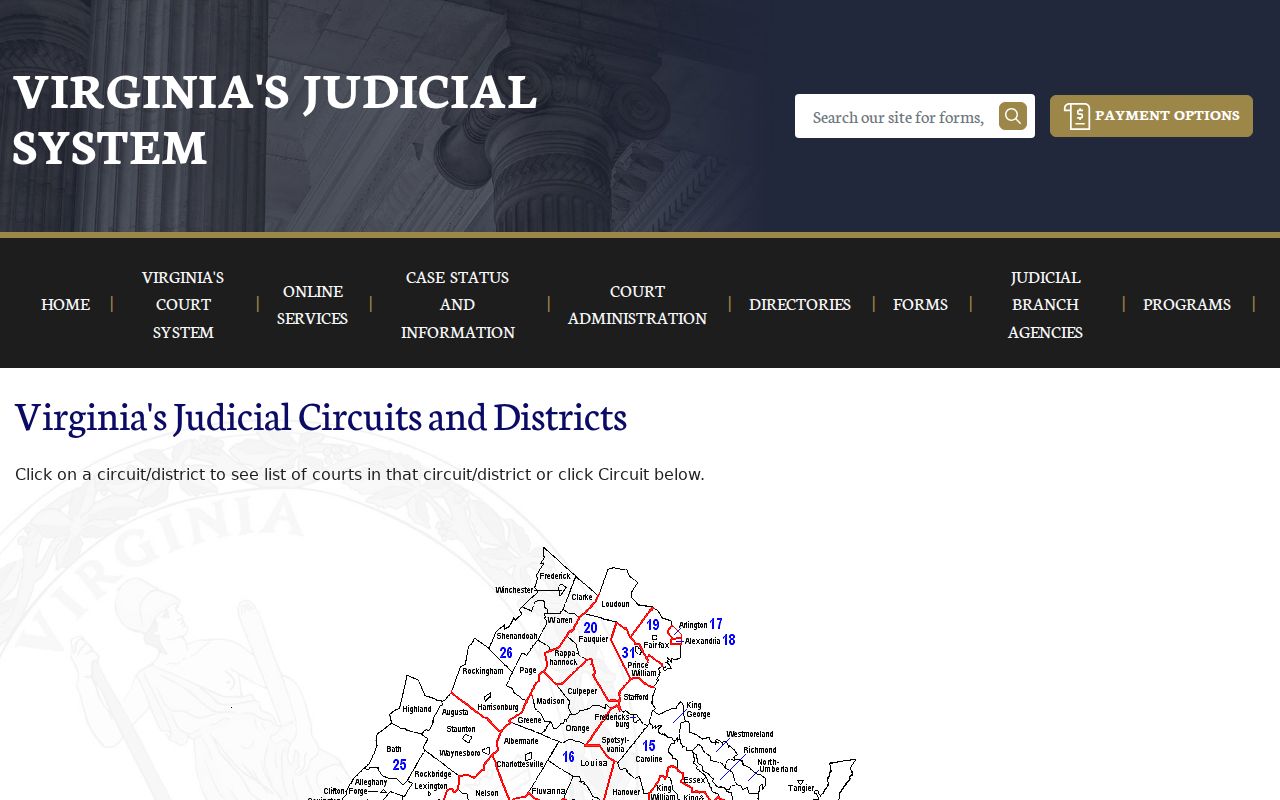
OCIS posts its own caution. Clerk-entered data may be incomplete, inaccurate, or outdated. A blank result can mean many things. A misspelled name, the wrong court, limited case coverage, a restricted file, or data-entry timing can all hide a case. So a blank screen is not clearance. Call the issuing clerk about the Virginia warrant before assuming it is clear.
How Virginia Warrant Systems Went Digital
Virginia never built one public statewide warrant search. Its warrant technology grew around court and police work instead. eMagistrate reached magistrate offices by June 2005. It standardized charge text across Virginia's bench. It also transmitted warrant and bail information straight to justice agencies. Virginia State Police reporting later described its VCIN/NCIC interface as an automated route for magistrate-issued warrants and protective orders. OCIS 2.0 is a different layer. It lets the public find selected court case data across court levels and localities. VCIN/NCIC stays restricted. That gap is deliberate in Virginia's access model. Virginia has no single public warrant database showing every local case and law-enforcement status. Court geography reinforces the local nature of the record. The state's 95 counties and 38 independent cities share Circuit, General District, and JDR court structures, while 31 circuits and 32 districts organize court administration. Those figures count courts, not warrants.
Virginia Warrant Records and VFOIA Requests
Virginia's Freedom of Information Act covers existing public records at state and local agencies. Statutory exclusions still apply. A good request names the agency, the record type, the locality, the case number if known, and a date range. VFOIA has firm limits, though. It cannot open VCIN or NCIC, force an agency to build a statewide warrant list, or replace a clerk's process for judicial records. Virginia State Police takes requests through its online NextRequest portal. Phone, mail, fax, email, walk-in, and paper routes are listed too. The law generally requires an initial response within five working days. The reply may only address availability, cost, or an exemption. Records may not arrive that fast. Actual search and copying charges can apply. A deposit may be required when the estimate runs high. The Virginia State Police FOIA instructions lay out the agency's request route and its fees.
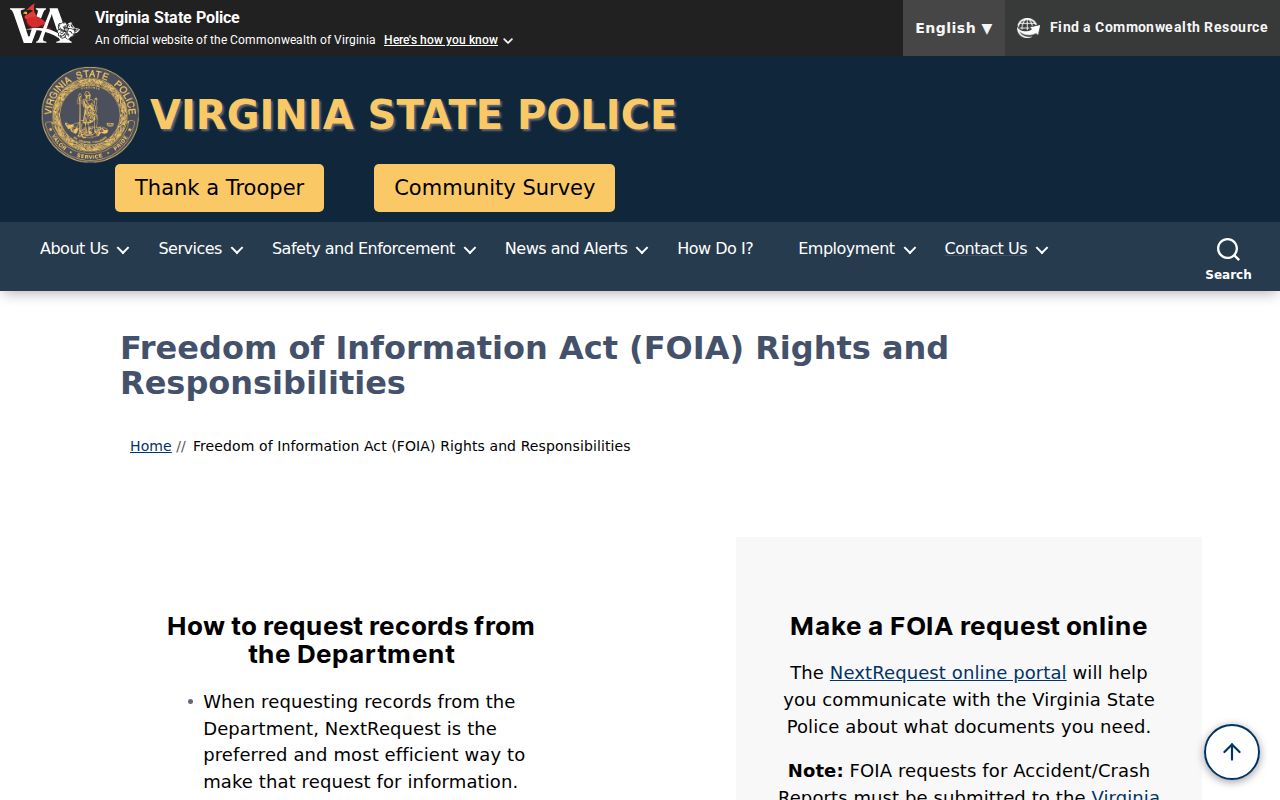
Court records go to the holding clerk. Circuit, General District, and JDR files follow different access limits in Virginia. Juvenile, sealed, and investigative information may be withheld. Restricted categories stay restricted. For a particular Virginia warrant, skip the guesswork. The Browse Counties directory points you to the right local clerk and the sheriff or police agency that serves the warrant. A VFOIA request works best alongside that call, not instead of it. Note: A VFOIA request seeks an existing record; it cannot compel disclosure of restricted law-enforcement network data.